

Do you or anyone you know face difficulties whilst travelling during Ramadan? We’ve got you covered!
A Complete Guide to Getting Around Hong Kong for Muslim Travellers
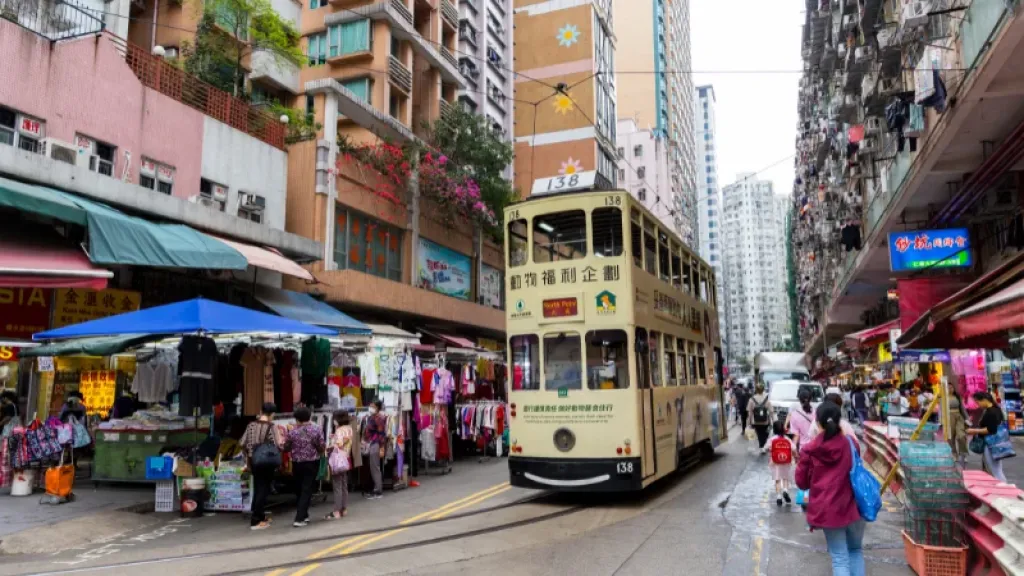
While Hong Kong may look densely packed and fast-paced at first glance, navigating the city is surprisingly easy, even for first-time visitors. Home to one of the world's most efficient public transit systems, the city seamlessly combines high-speed, reliable options with scenic, leisurely routes.
Also read: The Ultimate Muslim Guide to Hong Kong: Mosques, Hotels, and Halal Culinary Delights
Whether you have just landed at the airport or are setting off on foot to explore vibrant local neighborhoods, here is a practical guide to getting around Hong Kong with ease.
Octopus Card: The Ultimate Travel Essential
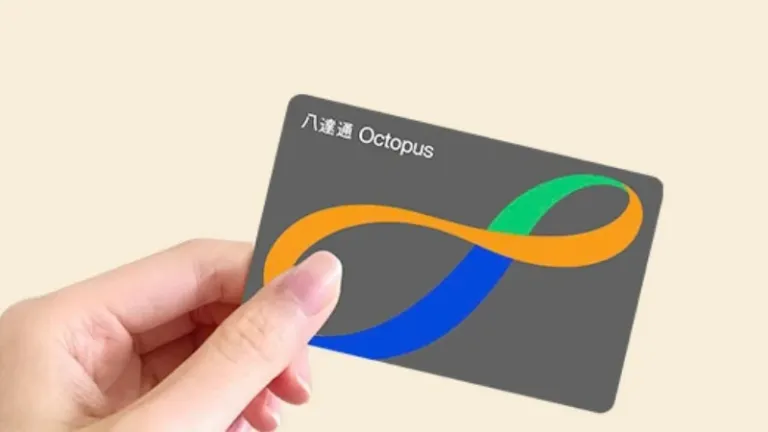 Image Credit: Octopus Cards | Official Website
Before diving into the various modes of transport, there is one item every traveller should secure first: the Octopus Card. This contactless smart card is accepted across virtually all public transport in Hong Kong, including the MTR, buses, ferries, trams, and selected taxis. It also doubles as a convenient payment method at convenience stores, vending machines, and popular attractions.
Visitors can choose between two main options:
Tourist Octopus (Physical Card): Priced at HK$39 and readily available at MTR stations, airport counters, or convenience stores like 7-Eleven.
Mobile Octopus (Digital): You can instantly add a digital card to your smartphone or smartwatch using the Octopus App for Tourists. This digital option makes checking your balance and topping up effortless using a credit or debit card.
Travel Tip: Keep your Octopus card within easy reach as you will be tapping it frequently. If you opt for the physical card, it also makes for a charming, practical keepsake to take home!
Airport Transfer Guide: Navigating From and To HKIA
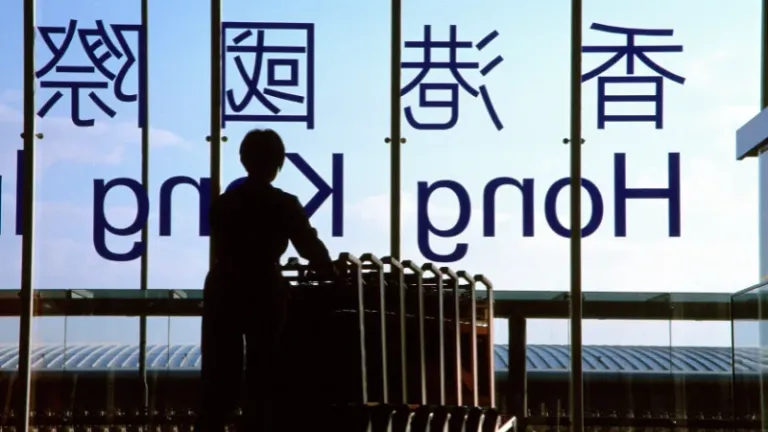 Image Credit: Asia Images Group | Canva Pro
Once you have picked up your Octopus Card, you are ready to begin your journey! For most travellers, the adventure starts right at Hong Kong International Airport (HKIA). Whether heading straight to your hotel to drop off your bags or eager to jump straight into sightseeing, here are the smoothest ways to reach the city center.
Airport Express
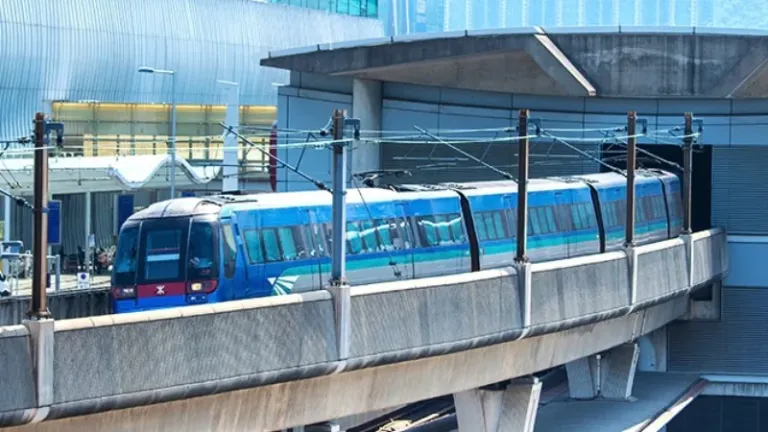 Image Credit: Hong Kong International Airport | Official Website
This high-speed rail line offers the fastest connection into the heart of the city. It takes just 24 minutes to reach Hong Kong Station, with intermediate stops at Tsing Yi and Kowloon Stations. Trains run every 10–15 minutes and feature complimentary Wi-Fi, spacious luggage racks, and in-town check-in services for selected airlines.
Fares: Starting from HK$115 to Hong Kong Station (cheaper rates apply when using an Octopus card or purchasing group tickets).
Airport Buses ('A' Route Airbuses)
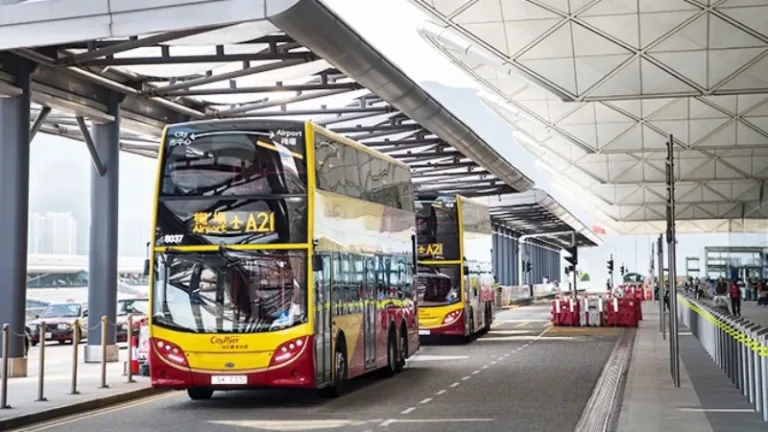 Image Credit: Hong Kong International Airport | Official Website
For a more budget-friendly route, airport buses cover an extensive network across Hong Kong Island, Kowloon, and the New Territories. The fleet is fully air-conditioned and equipped with generous luggage space.
Travel Tip: Follow the signs for "Airbus" located just outside the Arrivals Hall.
Taxis
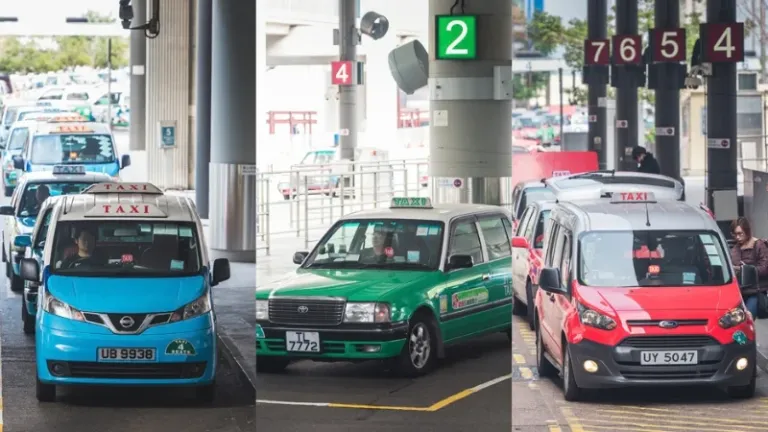 Image Credit: Hong Kong International Airport | Official Website
Taxi stands are located directly outside the Arrivals Hall. Taxis in Hong Kong are colour-coded according to their service areas:
Red: Serves most urban areas, including Hong Kong Island and Kowloon.
Green: Serves the New Territories.
Blue: Exclusively serves Lantau Island.
All taxis operate on official meters, though most drivers still only accept cash payments.
MTR: Fast, Clean, and Exceptionally Reliable
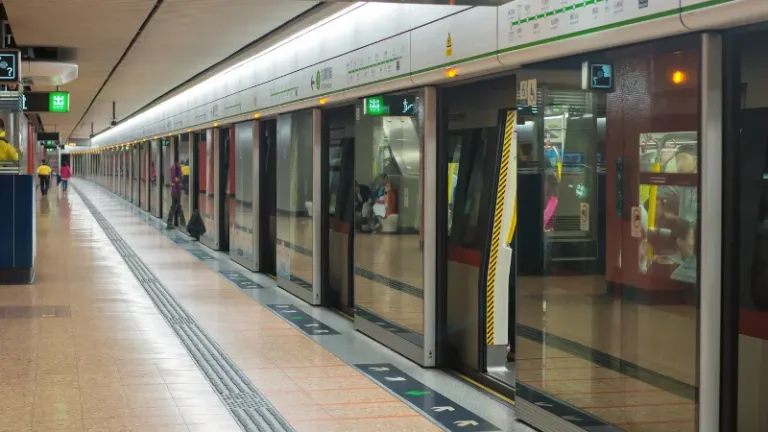 Image Credit: Gagliardi Photography | Canva Pro
The Mass Transit Railway (MTR) is Hong Kong's primary train network and the most efficient way to travel between districts. With over 150 stations spanning Hong Kong Island, Kowloon, and the New Territories, it reaches almost every landmark on your itinerary.
Trains are clean, air-conditioned, arrive every few minutes, and feature clear signage in both English and Chinese. Fares typically range from HK$5 to HK$30 depending on the distance, making it remarkably affordable. For visitors planning an intensive day of sightseeing, a 24-hour Tourist Day Pass is available for HK$65, offering unlimited MTR rides within a 24-hour window.
Travel Tip: Try to avoid weekday rush hours (07:30–09:30 and 17:00–19:00). To check real-time train schedules and map out routes, download the MTR Mobile or HKeMobility apps.
Ferries: A Scenic and Leisurely Crossing
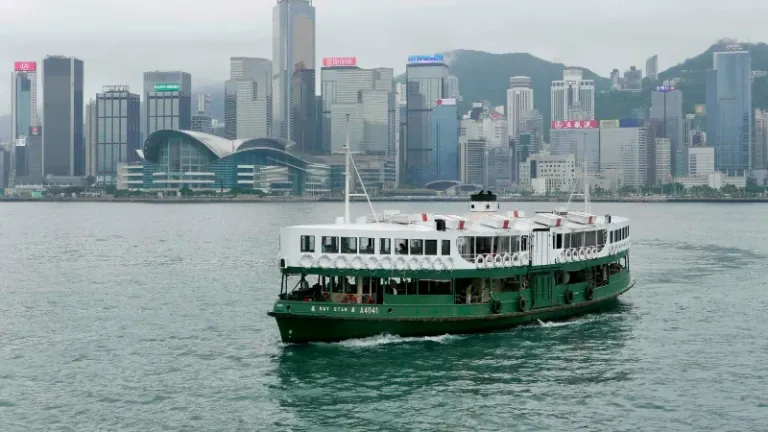 Image Credit: Kamus Cheung | Canva Pro
Crossing Victoria Harbour or venturing out to Hong Kong's outlying islands by ferry is a delightful highlight of any trip. It is especially convenient if you are staying near Central Piers or planning a day trip away from the bustling city core.
Star Ferry (Central ↔ Tsim Sha Tsui / Wan Chai)
An iconic symbol of Hong Kong's heritage, the Star Ferry has been crossing Victoria Harbour since 1888. While slightly slower than the MTR, the sweeping views of the city skyline make it well worth the extra few minutes.
Fares: Around HK$4–7, depending on the deck chosen and day of travel.
Outlying Island Ferries
If you prefer a relaxing day trip, ferries departing from Central Piers connect to picturesque islands such as Lamma Island, Cheung Chau, Peng Chau, and Discovery Bay. These destinations offer a peaceful retreat filled with coastal walks, sandy beaches, and fresh seafood dining.
Most islands are served by both standard ferries and fast ferries, with fast ferries shaving off travel time for a slightly higher fare. Tickets can be purchased directly at the pier on the day of travel, though arriving early on weekends is recommended to beat the crowds.
Trams & The Peak Tram: City Loops and Skyline Heights
Hong Kong Island Trams ("Ding Dings")
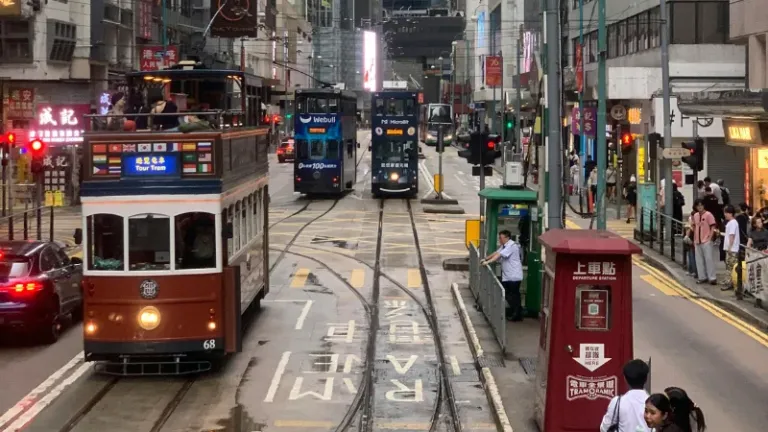 Image Credit: 土豆 地雷 | Canva Pro
Running along the northern coast of Hong Kong Island from Kennedy Town to Shau Kei Wan, these double-decker trams are a charming and budget-friendly mode of transport. At a flat rate of just HK$3 regardless of distance, taking a tram ride is a lovely way to observe lively neighborhoods like Central, Wan Chai, and Causeway Bay.
Keep the boarding rule in mind: enter through the rear doors and exit from the front, tapping your Octopus card or dropping exact cash as you disembark.
Travel Tip: Head up to the top deck and snag a front seat. The elevated views over historic streetscapes offer a wonderful perspective on local life.
Peak Tram (To Victoria Peak)
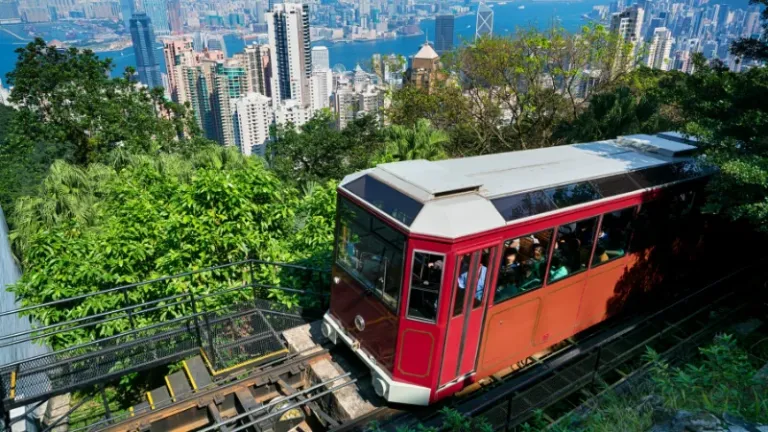 Image Credit: fazon1 | Canva Pro
To reach Hong Kong's highest point, the Peak Tram provides an iconic, steep climb up to Victoria Peak. Upgraded in 2022 with larger, modern cabins, this historic funicular railway offers a smooth journey. As it is one of the city's top attractions, queues can get long, so visiting early in the morning or later in the afternoon is recommended.
Fares: Around HK$62 for a single ride and HK$88 for a round-trip ticket.
Travel Tip: On the way up, try to sit on the right side of the carriage for the best views of the harbour and skyscrapers.
Buses and Minibuses: Reaching Hidden Local Corners
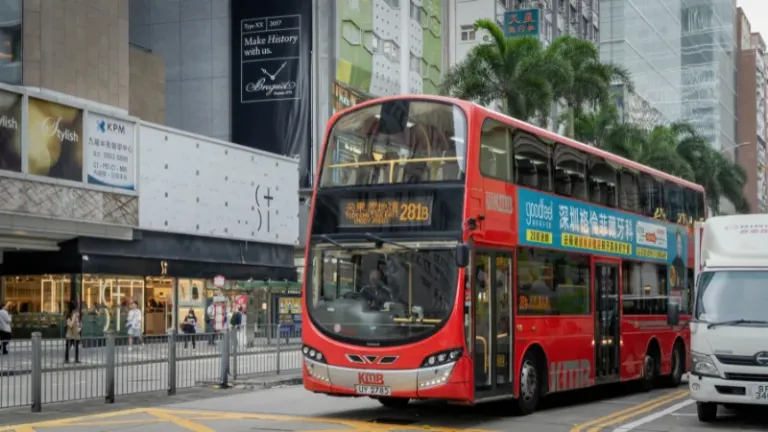 Image Credit: Abhishek Navlakha | Pexels
Hong Kong's bus network is vast and well-organized, making it easy to reach spots not directly connected by the MTR. Double-decker buses operate across Hong Kong Island, Kowloon, the New Territories, and Lantau Island.
Fares are distance-based, ranging from HK$4 to HK$40, and can be paid using an Octopus card or exact cash. Using the HKeMobility app will help you check live arrival times and bus routes seamlessly.
Travel Tip: Sitting on the upper deck turns a simple bus ride into a scenic city tour.
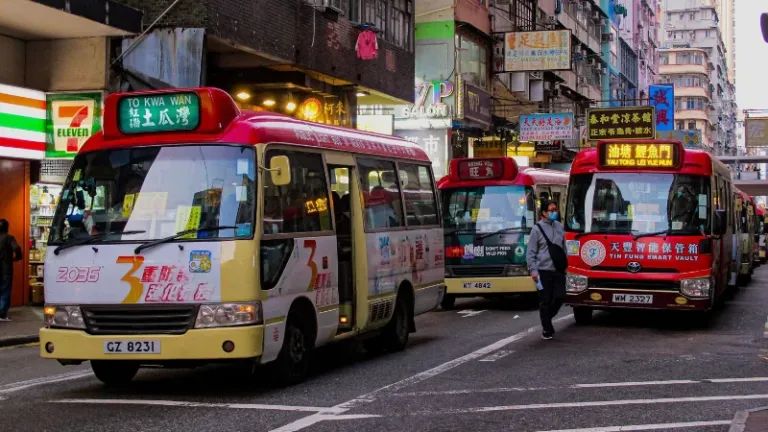 Image Credit: Cyrus YUen | Pexels
In addition to double-decker buses, 19-seater Minibuses offer faster, localized travel. Green Minibuses run on fixed routes with set fares, while Red Minibuses operate more flexibly without fixed stops, requiring cash payments as you alight. Because Red Minibuses often lack English route signs, sticking to Green Minibuses or double-decker buses is generally easier for visitors.
Taxis: Door-to-Door Convenience
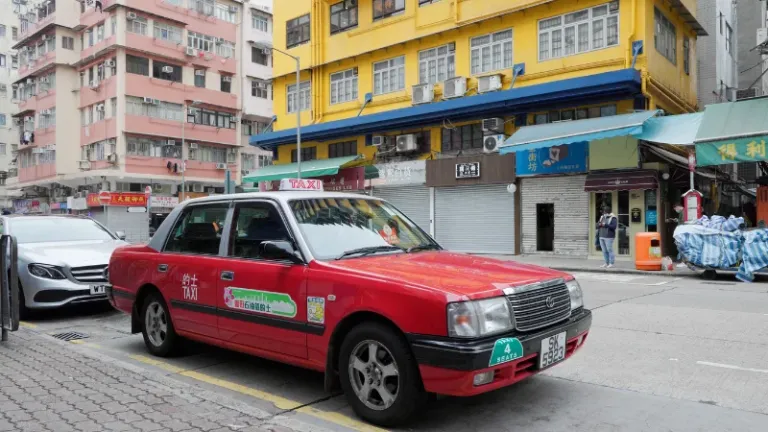 Image Credit: Leung Cho Pan | Canva Pro
Taxis are easy to flag down across Hong Kong and provide great convenience for door-to-door travel, especially when carrying heavy bags or traveling late at night. All taxis are metered, air-conditioned, and charge a base fare starting at HK$27 for the first 2 km, increasing incrementally with distance and wait times.
Just like airport taxis, vehicles are colour-coded by region:
Red: Operates across urban areas (including HKIA, Kowloon, and Hong Kong Island).
Green: Serves the New Territories.
Blue: Exclusively serves Lantau Island.
While some taxis accept Octopus cards, credit cards, or mobile wallets, many drivers still prefer cash. Carrying small bills and coins is always wise. You can hail a taxi on the street away from restricted zones, or queue at designated taxi stands outside malls and hotels during peak hours.
Travel Tip: Always ask the driver for a printed receipt before stepping out of the taxi.
Also read: 8 Muslim-Friendly Hotels in Hong Kong, a Great Choice for Muslim Travelers
Public transport in Hong Kong does much more than get you from point A to point B—it shapes how you experience the city. Whether speeding underground on the MTR, catching the breeze from the top deck of a "Ding Ding" tram, or watching the skyline shift from a ferry, traveling around becomes a memorable part of the trip itself. Fast when you need it to be and scenic when you want to slow down, Hong Kong's transit system opens up the city one smooth connection at a time.
Cover image credit: Leung Cho Pan | Canva Pro
Published at
About Author
Jeihan Azalea
Jeihan is an ambitious explorer who travels the world with a pen in her hand.
Subscribe our Newsletter
Get our weekly tips and travel news!
Recommended Articles
Useful Tips for Travelling During Ramadan Muslim Travel: 5 Things to Do in Dubai For Adrenaline Junkies Dubai is worth far more than a layover – This wondrous city has plenty to offer! Here are some exciting activities in Dubai for the Adrenaline Junkies!
The REAL Iran – in Photos What’s really in Iran? See for yourself!
17 Muslim-Friendly Travel Destinations to Visit in 2017 Check out these 17 Muslim-friendly travel destinations for your next holiday. Finding halal food will not be a problem anymore!
6 Best Places to Visit in Pakistan for Your First Trip Pakistan is underrated travel destination that has plenty of exciting destinations filled with beautiful nature, culture and heritage. Take a pick from these cities and regions for your first trip to Pakistan!
Latest Articles
10 Things to Do in Busan for Free, A Muslim Travellers Checklist Save money on your South Korea trip!
11 Day Trips From Kyoto, Must-See Destinations for Muslim Travellers Explore beyond Kyoto!
Where to Find Halal Food in Beijing, China for Muslim Travellers Discover 10 best halal restaurants in Beijing, from authentic Chinese dishes and hot pot to Uyghur cuisine, perfect for Muslim travelers
9 Mosques and Prayer Rooms in Switzerland Muslim Travelers Should Know A Muslim traveler’s guide to mosques and prayer rooms in Switzerland, including Geneva, Zurich, Bern, Lausanne, and major airports
Best Halal Food in Switzerland: Where to Eat in Zurich, Geneva, Lucerne & Interlaken Looking for halal food in Switzerland? Discover 8 Muslim-friendly restaurants in Zurich, Geneva, Lucerne, Interlaken and Zermatt