
discover 8 Best Halal Breakfast Spots in Batam, Indonesia from comforting noodles and \dim sum to classic batam dishes
21 Fascinating Things You Probably Didn’t Know About China For Muslim Travellers
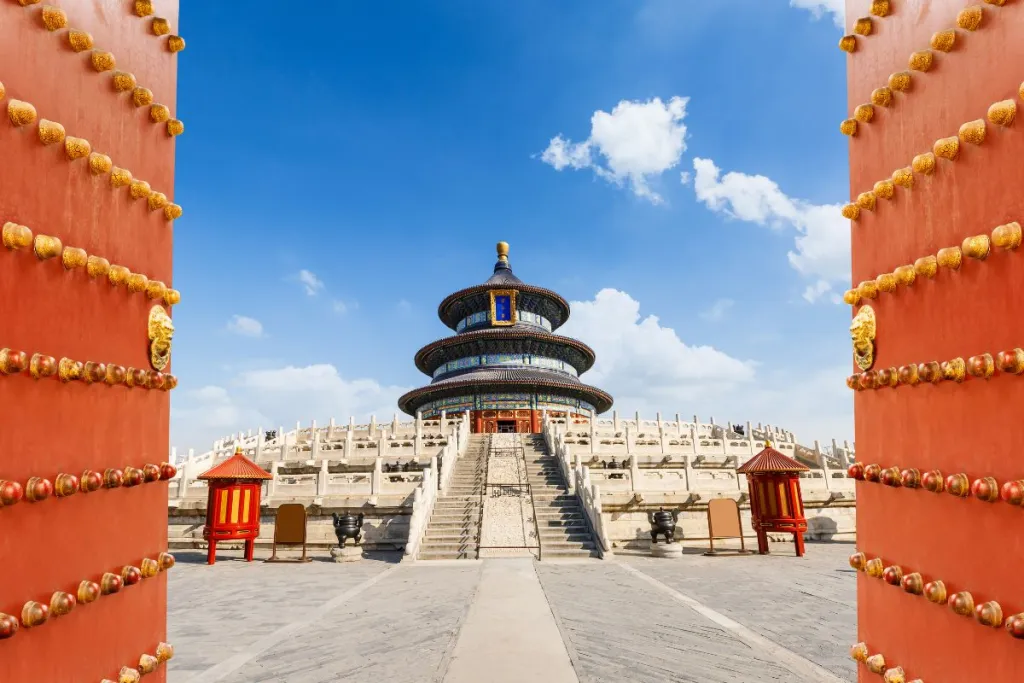
If there’s one destination that constantly surprises travellers, it has to be China. It’s the kind of place where ancient traditions meet futuristic cities, where centuries-old culture exists alongside cutting-edge technology. And if you’re visiting as a Muslim traveller, China becomes even more intriguing, because while it may not be the most obvious halal-friendly destination, it’s definitely one that rewards those who plan ahead.
Here’s a deeper look at some of the most fascinating things about China, and what you should know before you go.
A Massive Country That Runs on Just One Time Zone
China’s sheer size is hard to wrap your head around. It’s the fourth-largest country in the world, stretching across vast landscapes, climates, and regions. Yet despite this, the entire country follows just one official time zone, Beijing time. This creates some unusual daily rhythms, especially in western parts of China, where the sun can rise as late as 10am. For travellers, this can feel slightly disorienting at first, especially when your body clock doesn’t quite align with the daylight.
For Muslim travellers, this becomes even more important when it comes to prayer times. Since sunrise and sunset can feel “shifted,” it’s essential to rely on a reliable prayer app and double-check local timings rather than assuming based on daylight alone.
A Population That Shapes Everything
China isn’t just big in size; it’s big in population too. With over a billion people, it remains the most populous country in the world. This means that roughly one in every five people you meet globally is Chinese, and Mandarin has become the most widely spoken native language on Earth. When you visit cities like Beijing, Shanghai, or Guangzhou, you’ll immediately feel the scale of this population, from crowded train stations to bustling street markets.
For Muslim travellers, this density can actually work in your favour. Larger populations often mean more diverse communities, and in many cities, you’ll find pockets of Muslim communities that bring with them halal food options and mosques.
A Surprisingly Cashless Society
One of the biggest culture shocks for many travellers is how little cash is used in China. Mobile payment platforms like Alipay and WeChat Pay have completely transformed daily life, allowing locals to pay for everything, from street food to public transport, with just their phones. In fact, many places in major cities don’t even accept cash anymore.
This can be slightly challenging at first, especially for international travellers who are not set up on these platforms. If you’re planning a trip, it’s worth preparing in advance by linking your card to one of these apps or ensuring your bank card works seamlessly. While some smaller halal eateries may still accept cash, especially in Muslim neighbourhoods, going cashless will make your experience much smoother.
Dining Etiquette That Might Catch You Off Guard
Dining in China comes with its own set of cultural norms, and some of them might feel unfamiliar. Behaviours like slurping noodles, burping, or even making loud eating sounds are generally accepted and not considered rude. In fact, they can sometimes be seen as a sign that you’re enjoying your meal.
While it may take some getting used to, understanding these differences helps you better appreciate the local culture. For Muslim travellers, the bigger focus will likely be on finding halal food. Thankfully, this is very doable, especially if you keep an eye out for the “清真 (Qingzhen)” label, which indicates halal-certified or Muslim-friendly food.
A Lesser-Known Muslim Presence
Many travellers are surprised to learn that China is home to a significant Muslim population. Islam has been present in China for centuries, and today, there are millions of Muslims across the country, particularly among ethnic groups like the Hui and Uyghur communities. Because of this, you’ll find mosques and halal eateries scattered across various cities.
In destinations like Xi’an, Beijing, and Lanzhou, Muslim-friendly facilities are more visible, making it easier to plan your meals and prayers. While it may not be as straightforward as travelling in Southeast Asia or the Middle East, the infrastructure is there, you just need to know where to look.
Getting Around Is Surprisingly Easy
Travelling across China might seem intimidating at first due to its size, but the country’s high-speed rail network makes it incredibly convenient. In fact, China has the largest high-speed rail system in the world, connecting major cities with fast, efficient trains that are often more convenient than flying.
For Muslim travellers, train journeys can also be more flexible when it comes to managing prayer times. With a bit of planning, you can find quiet corners or time your prayers between connections, making long-distance travel much more manageable.
China Owns Every Panda You See
Here’s a fun one: Every panda you see anywhere in the world technically belongs to China. Even pandas living in zoos overseas are only there on loan, and any baby pandas born abroad are eventually sent back to China. It’s a unique system that helps China manage panda conservation globally.
A Pork-Dominated Food Culture, But Still Navigable
China’s cuisine is incredibly diverse, but one thing is clear: pork plays a major role in many dishes. In fact, China is home to about half of the world’s pigs, and pork consumption is extremely high. For Muslim travellers, this might sound intimidating at first.
However, it’s far from impossible to navigate. In many cities, especially those with Muslim communities, you’ll find halal alternatives like hand-pulled noodles, grilled meats, and dumplings made without pork. With a bit of research and awareness, eating halal in China can actually become one of the highlights of your trip.
A Country of Contrasts
Despite its modern cities and rapid development, China still has areas where traditional lifestyles remain unchanged. One of the most surprising examples is that millions of people still live in cave dwellings, particularly in rural regions. These homes are often used because they are affordable and naturally insulated.
This contrast between ultra-modern cities and traditional living is something you’ll notice throughout your journey in China, offering a deeper understanding of its diverse socio-economic landscape.
Traffic Like You’ve Never Seen Before
With such a large population, it’s no surprise that traffic congestion can be intense. But what’s fascinating is how China has adapted to this. In some areas, there’s even a service where “traffic rescuers” can be hired, one person drives your car while another takes you on a motorbike to your destination.
It’s unconventional, but it perfectly reflects China’s ability to innovate solutions for everyday challenges.
A Festival That Stops the Nation
Chinese New Year is easily the most important celebration in the country, lasting up to 15 days. During this time, millions of people travel back to their hometowns, creating what is often described as the largest human migration in the world.
For travellers, this period can be both exciting and overwhelming. While the festive atmosphere is incredible, transport can be crowded and prices may surge. Planning ahead is key if your trip coincides with this season.
Changing Family Policies
China’s family planning policies have evolved significantly over time. What was once a strict one-child policy has now been relaxed, allowing families to have up to three children. This shift reflects broader changes in the country’s demographic and economic landscape.
A Legacy of Innovation
China’s contributions to the world go far beyond what many people realise. Paper, as we know it today, was developed in China, and the country made early advancements in mathematics, including algebra and trigonometry. Even the understanding of blood circulation existed in China long before it was recognised in Europe.
These achievements highlight China’s long-standing role as a centre of innovation and knowledge.
Landmarks That Tell Stories
No visit to China would be complete without exploring its iconic landmarks. The Great Wall stretches over 8,800 kilometres, standing as one of the most impressive man-made structures in history. Meanwhile, the Forbidden City, with over 9,000 rooms, offers a glimpse into the grandeur of China’s imperial past.
A Complex Military History
China’s history is also marked by significant military developments. It has the largest army in the world and was among the earliest civilisations to experiment with chemical warfare. Interestingly, it also played a humanitarian role during World War II, with Shanghai serving as a safe haven for Jewish refugees who were not accepted elsewhere.
A Country of Many Cultures
China is far from culturally uniform. The differences between the North and South are especially noticeable, from the types of food people eat to the languages they speak. Northern regions favour wheat-based dishes like noodles and dumplings, while southern regions are known for rice-based meals and seafood.
These regional differences make travelling through China feel like visiting multiple countries in one.
A Civilisation That Never Stopped
Finally, what truly sets China apart is its history. With a civilisation that dates back to around 6000 BC, it is considered the longest continuous civilisation in the world. This deep-rooted heritage is still visible today, in its traditions, architecture, and way of life.
Meeting Muslim Locals in China: A Culture Within a Culture
One of the most meaningful parts of travelling in China as a Muslim isn’t just finding halal food or mosques, it’s encountering the local Muslim communities themselves. Islam has been present in China for over a thousand years, and today, Chinese Muslims are a vibrant part of the country’s cultural fabric, each group with its own identity, traditions, and way of life.
Among the most well-known are the Hui Muslims, who are spread across many parts of China, including cities like Xi’an, Beijing, and Ningxia. What makes the Hui community especially interesting is how seamlessly they blend Chinese culture with Islamic practices. You might see traditional Chinese architecture in mosques, or locals wearing modest attire while speaking fluent Mandarin and running halal eateries that have been passed down through generations. Walking through places like Xi’an’s Muslim Quarter, you’ll feel this unique fusion, where the call to prayer exists alongside the buzz of a classic Chinese street market.
Then there are the Uyghur Muslims, primarily from the Xinjiang region in western China. Their culture feels distinctly different, with stronger Central Asian influences in everything from food to language and even music. Dishes like lamb skewers, naan bread, and hand-pulled noodles are staples here, and if you come across Uyghur-run restaurants in major cities, they’re often some of the best places to enjoy authentic halal cuisine.
For Muslim travellers, these communities can become more than just a source of halal food, they offer a sense of familiarity in an otherwise unfamiliar destination. Stepping into a mosque, hearing Arabic phrases, or even just exchanging smiles with fellow Muslims can feel incredibly grounding, especially in a country where Islam isn’t the majority religion.
At the same time, it’s important to approach these experiences with cultural sensitivity and awareness. China is a vast and complex country, and the experiences of Muslim communities can vary greatly depending on the region. As travellers, the best thing we can do is observe respectfully, support local Muslim-owned businesses, and appreciate the diversity within the global ummah.
In many ways, meeting Muslim locals in China reminds you that Islam is truly universal, expressed differently across cultures, yet connected by the same faith.
Final Thoughts for Muslim Travellers
Travelling in China as a Muslim may require a bit more preparation, but it’s far from impossible. In fact, it can be incredibly rewarding. With the right planning, from locating halal food to identifying nearby mosques, you’ll discover a destination that is rich, diverse, and full of unforgettable experiences.
China isn’t just a place you visit. It’s a place that stays with you long after you leave.
Published at
About Author
Aimi Zulkiflee
Aimi is the ultimate daydreamer with a flair for adventure and an avid novel reader with a soft spot for all things fairytale. She is known for her friendly demeanor, albeit with a bit of a short temper. Forever striving to live her cutesy yet demure life.
Subscribe our Newsletter
Get our weekly tips and travel news!
Recommended Articles
Latest Articles
8 Best Halal Breakfast Spots in Batam, Indonesia 10 Best Halal Restaurants in Macao for Muslim Travellers Explore 10 Best Halal Restaurants in Macao for a halal food hunt in Macao
Best Resorts in Sabah, Malaysia With Amazing Nature Views Discover the best resorts in Sabah, Malaysia, from beachfront escapes and island stays to rainforest retreats with stunning nature views
10 Best Padang Restaurants in Jakarta for Authentic Indonesian Food Discover the 10 best Padang restaurants in Jakarta for authentic Indonesian food, from legendary rendang and Ayam Pop to hidden Minang favourites
Bangkok Declares State of Emergency Due to Flooding: Essential Travel Guidance for Muslim Travellers Stay safe, everyone!