

Muslim-friendly Theme Parks – For thrill-seeking youths or the fun-loving families, often trips are made even better thanks to a visit to theme parks. However, not many theme parks around the world are as Muslim-friendly as we hope. Looking for these places might be difficult, so here is a list of 10 Muslim-friendly theme parks […]
8 Muslim-Friendly Places to Visit in Oman for First-Time Travellers
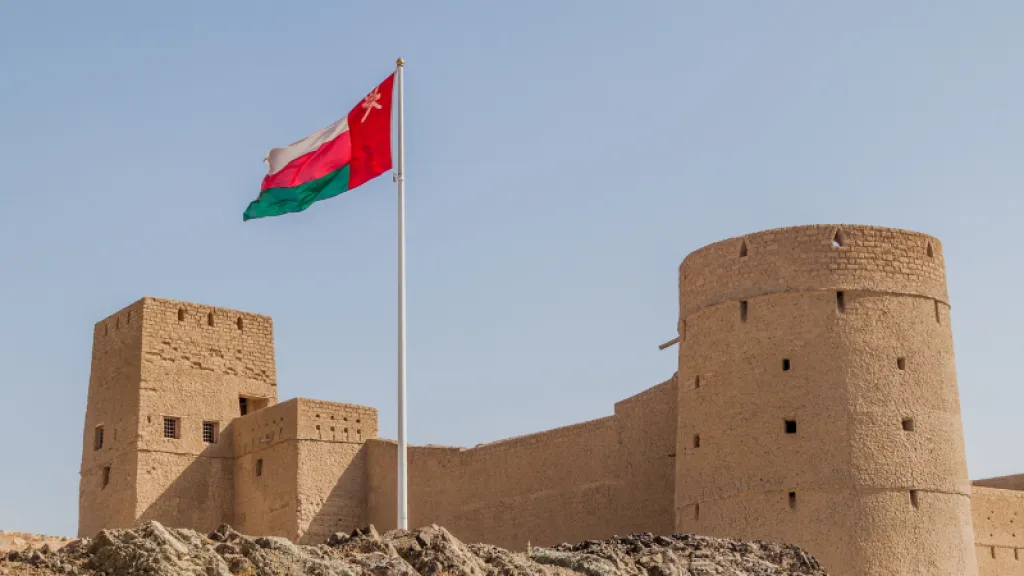
Oman is a destination where ancient traditions and modern Muslim life come together beautifully. From grand mosques and historic forts to traditional souks, peaceful wadis and golden desert dunes, the country offers plenty of experiences for travellers looking to discover a different side of the Arabian Peninsula. What makes Oman even more special is its warm hospitality. It is not unusual for locals to welcome visitors with a cup of traditional Omani coffee, known as kahwa, and a few dates. For first-time visitors, these simple gestures offer a lovely introduction to Omani culture.
Also read: Visit Muscat, Oman: Where to Eat, Explore and Stay!
For Muslim travellers, Oman is also a comfortable destination to explore. Islamic heritage is part of everyday life, halal food is widely available, and mosques can be found throughout the country. Whether you are interested in learning about the history of Islam, wandering through traditional markets or enjoying the country's natural landscapes, there is something for every kind of traveller. If this is your first trip to Oman, here are eight Muslim-friendly places worth adding to your itinerary.
Mosques and Islamic Heritage in Oman
Oman's Islamic heritage is closely connected to its history, architecture and local way of life. Visiting these places is a meaningful way to understand the country's Muslim identity while discovering some of its most interesting landmarks.
1. Sultan Qaboos Grand Mosque, Muscat
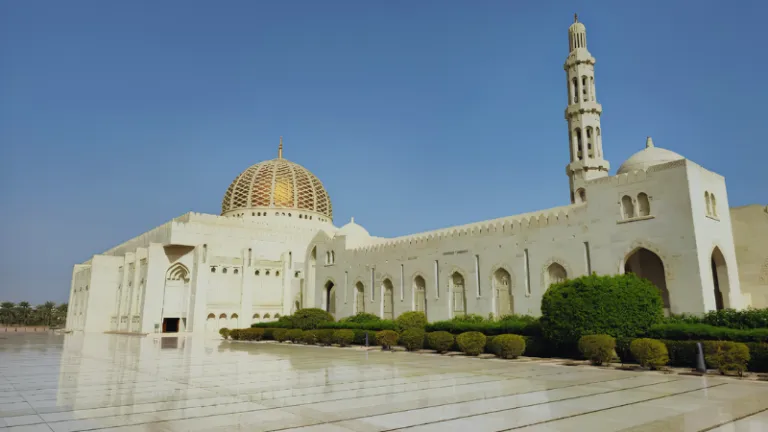 If there is one landmark you should not miss on your first visit to Oman, it is Sultan Qaboos Grand Mosque in Muscat. Known for its impressive architecture and peaceful atmosphere, this mosque is one of the country's most recognisable attractions.
Step inside the main prayer hall and you will find a magnificent chandelier hanging above the men's prayer area. Measuring around 14 metres and weighing approximately 8.5 tonnes, it is decorated with hundreds of thousands of Swarovski crystals and 24-carat gold plating. The mosque was also once home to the world's largest hand-woven carpet and chandelier, although larger versions have since been created elsewhere.
Beyond its impressive size, the mosque is a beautiful example of Islamic architecture, with five minarets, detailed decorative features and spacious courtyards. It is a lovely place to appreciate Oman's religious heritage, even if you are simply visiting to admire the building.
Non-Muslim visitors are generally allowed to enter from 8:00 am to 11:00 am daily, except Fridays. Modest clothing is required, and women must cover their hair, arms and legs. Children under 10 are not permitted inside the prayer halls. Abayas and scarves may be available at the entrance, although it is best to check the current visitor arrangements before arriving.
Location: Muscat, Oman
Visitor hours: 8:00 am–11:00 am, Saturday to Thursday
What to know: Modest dress is required. Visitor rules apply, so check the latest guidance before your visit.
2. Tomb of the Companion Mazin bin Ghadub, Samail
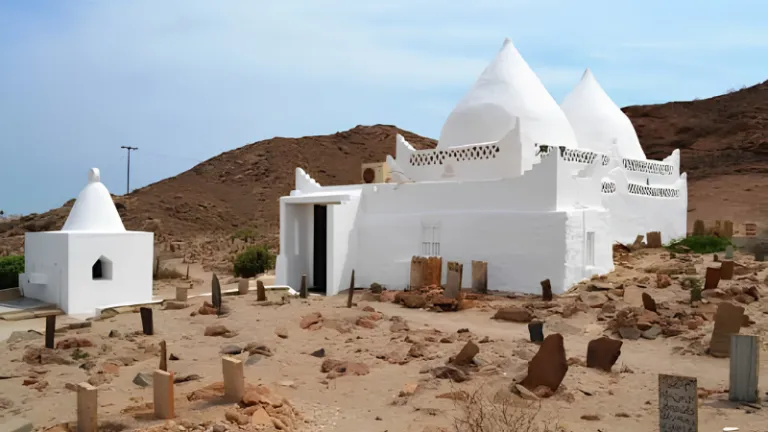 For a quieter experience away from Muscat's busy streets, consider visiting the Tomb of the Companion Mazin bin Ghadub in Samail.
This historical Islamic site is associated with Mazin bin Ghadub, widely recognised as the first person from Oman to embrace Islam around 1,400 years ago. His story makes the site an important part of Oman's early Islamic history.
The tomb is set within a lush wadi, creating a peaceful atmosphere surrounded by greenery. It is a meaningful place for visitors interested in learning more about how Islam became part of Omani society.
The site also holds a special place in the local community. Visitor numbers often increase on Fridays and during Ramadan, when local families gather and bring dates, fruit, water and kahwa to share for iftar.
Located roughly an hour's drive from Muscat, it can be included in a day trip to explore Samail and its surrounding landscapes.
Location: Samail, Oman
Opening hours: Reportedly accessible 24 hours
What to know: A quiet historical site connected to Oman's early Islamic heritage.
Culture, Forts and Traditional Souks
One of the best ways to experience Oman is to explore its old towns, traditional markets and historic buildings. These places offer a glimpse into the country's trading history and everyday traditions, from the scent of frankincense in the souks to the stories behind its impressive forts.
3. Mutrah Souq and Corniche, Muscat
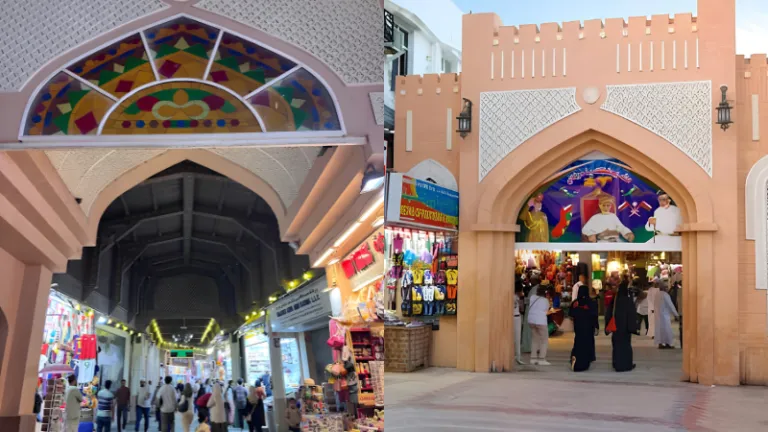 A trip to Muscat would not be complete without exploring Mutrah Souq, one of the city's best-known traditional markets. Located beside the harbour, the souq has a long history as a trading centre, thanks to Oman's strategic position along historic maritime routes connecting India, China and other parts of the world.
Walking through its covered wooden alleyways is an experience in itself. You will find shops selling frankincense, spices, perfume oils, traditional clothing, Omani silver jewellery and handmade souvenirs. The further you wander into the market, the more interesting the atmosphere becomes, with the scent of incense and spices filling the air.
If you are looking for something special to bring home, keep an eye out for traditional silver jewellery, embroidered kumahs (Omani caps) and white dishdashas, the traditional garments worn by Omani men.
Once you have finished shopping, head outside to Mutrah Corniche. This waterfront promenade offers lovely views of the harbour, traditional boats and the surrounding mountains. You can also visit Mutrah Fort, which sits on a hill overlooking the coastline and offers panoramic views of the area.
For Muslim travellers, this is a lovely place to experience Omani culture at a relaxed pace while enjoying the local atmosphere.
Location: Mutrah, Muscat, Oman
Highlights: Traditional souq, frankincense, Omani silver, Mutrah Corniche and Mutrah Fort
What to buy: Perfume oils, spices, silver jewellery and traditional Omani souvenirs
4. Nizwa Fort and Nizwa Souq, Nizwa
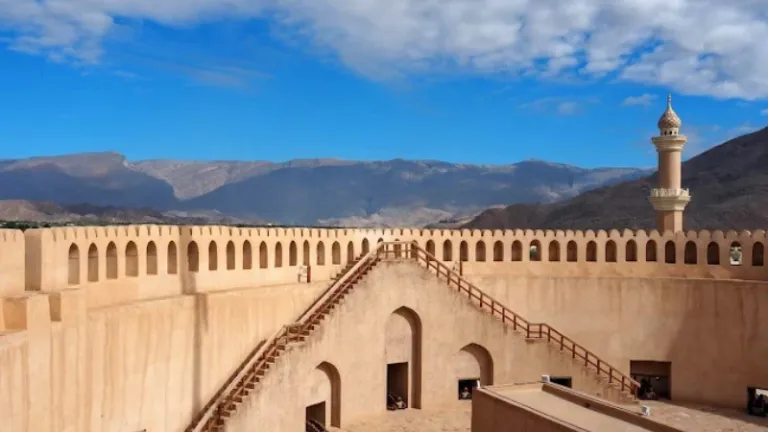 If you want to discover more of Oman's history beyond the capital, make time for Nizwa. Located inland from Muscat, this historic city is famous for its traditional architecture, cultural heritage and impressive fort.
Nizwa Fort is one of Oman's most visited national monuments. Built during the 17th century, it once served as an important centre of administration and defence for the region's ruling Imams and Walis. Its construction took around 12 years, with the main structure built above an underground stream.
The fort is particularly recognisable for its enormous circular tower, considered the largest of its kind in Oman. As you explore the different rooms, you will find exhibits and historical artefacts that tell stories about Omani life and the country's defensive strategies. The fort also features seven wells, former prison areas and various defensive mechanisms designed to protect it from attacks.
Right next door, Nizwa Souq offers a different kind of experience. The traditional market is a great place to discover Omani halwa, silver jewellery, spices and the famous khanjar, a traditional curved dagger that is an important symbol of Omani culture.
If you visit on a Friday, you may also have the chance to experience the traditional livestock market, where local traders gather to buy and sell animals. It is a fascinating glimpse into the city's trading traditions.
Location: Nizwa, Ad Dakhiliyah Governorate, Oman
Highlights: Historic fort, circular defence tower, traditional souq and Omani halwa
What to buy: Omani sweets, silver jewellery and traditional souvenirs
5. Bait Al Safah, Al Hamra
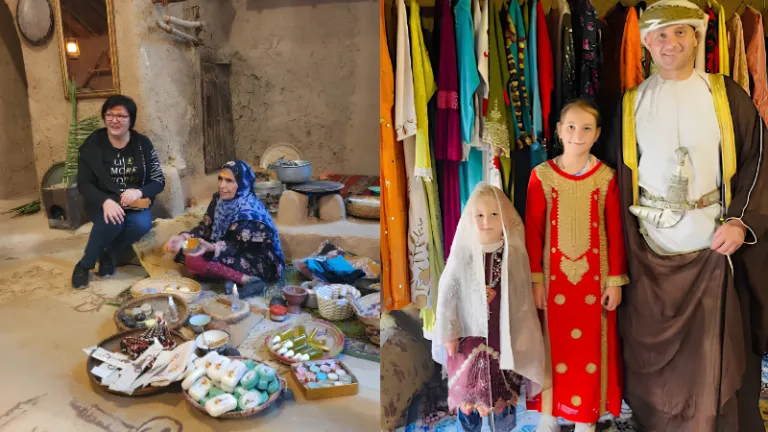 Want to see what everyday life in Oman looked like before modern conveniences became common? Bait Al Safah in Al Hamra is a great place to start.
This restored mud-brick house is believed to be around 350 to 400 years old. Built during the Ya'aruba dynasty, it once served as a sheikh's residence and a gathering place for the local community. Today, it operates as a living history museum, giving visitors a closer look at traditional Omani homes and daily life.
What makes Bait Al Safah special is its interactive cultural demonstrations. Local Omani women guide visitors through the house while showing traditional activities such as roasting and grinding kahwa, baking thin Omani bread, spinning wool and making natural oils from plants.
You may also be welcomed with dates and a cup of Omani coffee, a lovely example of the hospitality that makes travelling in Oman so memorable.
Do not forget to head up to the rooftop terrace. From here, you can enjoy panoramic views of Al Hamra's traditional mud-brick houses, date palm groves and ancient falaj irrigation channels.
Location: Al Hamra, Ad Dakhiliyah Governorate, Oman
Opening hours: Reportedly daily, 9:00 am–6:00 pm
Highlights: Traditional Omani house, cultural demonstrations, local coffee and rooftop views
Nature, Wadis and Desert Adventures
Beyond its mosques and historic towns, Oman is also home to beautiful natural landscapes. Think turquoise pools hidden between rocky mountains, vast golden sand dunes and coastal scenery that changes with the seasons. These destinations are ideal if you want to add a little adventure to your first trip.
6. Wadi Bani Khalid, Ash Sharqiyah
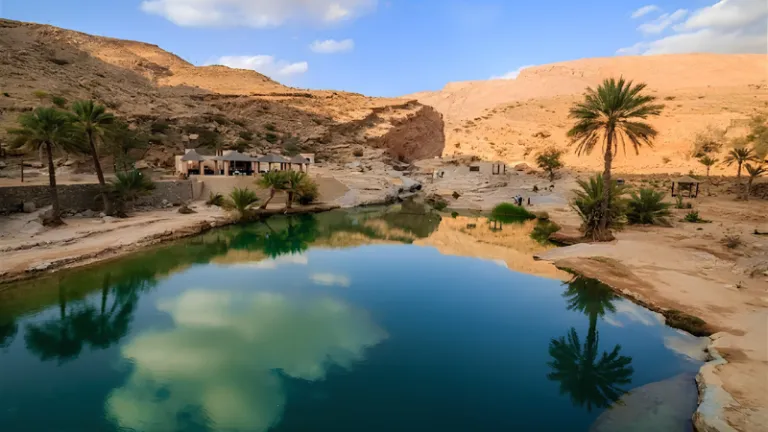 If you are looking for a refreshing escape from the desert heat, Wadi Bani Khalid is one of the most beautiful natural attractions in Oman.
Located in the Ash Sharqiyah region, this famous oasis is known for its clear turquoise pools surrounded by rocky mountains and date palm trees. Unlike some seasonal wadis, its pools are known for having water throughout the year, making it a popular destination for swimming and relaxing.
You can spend your time enjoying the natural pools, taking photographs or walking along the surrounding landscape. If you are up for a little adventure, you can also explore Muqal Cave, also known as Kahf Maqal. The cave can be reached via a rocky walking route of around one kilometre.
Wadi Bani Khalid is also a great stop to combine with a trip to Wahiba Sands, as both destinations are often included in the same journey from Muscat.
For Muslim travellers, it is worth paying attention to local dress expectations, especially around the swimming pools. Wear modest swimwear that covers your shoulders and knees, and consider wearing a T-shirt while swimming. Comfortable water shoes are also recommended, as some areas can be rocky and slippery.
The best time to visit is generally between October and March, when the weather is more comfortable for outdoor activities. Arriving before 10:00 am or after 2:00 pm may also help you avoid some of the crowds.
Location: Ash Sharqiyah, Oman
Distance from Muscat: Approximately 200–260 km, or around three hours by car
Highlights: Natural swimming pools, Muqal Cave, rocky landscapes and date palms
Facilities: Reportedly includes toilets, changing rooms and nearby restaurants
Entry: Reportedly free
7. Wahiba Sands (Sharqiyah Sands)
 No first trip to Oman feels complete without experiencing its vast desert landscape. Wahiba Sands, officially known as Sharqiyah Sands, is one of the country's most famous desert destinations, with rolling dunes that stretch across a huge area of eastern Oman.
The landscape is particularly beautiful around sunset, when the golden and orange sand dunes change colour under the evening light. It is also a wonderful place to enjoy a night under the stars, far away from the bright lights of the city.
There are plenty of ways to experience the desert. You can try dune driving in a 4x4, go sandboarding down the slopes or enjoy a camel ride across the dunes. For a more relaxed experience, consider staying overnight at a desert camp, where you can enjoy traditional Omani coffee, dates and dinner while taking in the peaceful surroundings.
Wahiba Sands is also a great opportunity to learn more about Bedouin heritage and traditional desert life. Some camps offer cultural experiences that introduce visitors to local customs and hospitality.
If you are planning to drive into the dunes yourself, remember that a suitable 4x4 vehicle is essential. Driving on soft sand requires experience and preparation, so first-time visitors may prefer to book a guided desert trip.
The cooler months between October and April are generally the most comfortable time to visit, particularly if you want to enjoy outdoor activities and spend a night in the desert.
Location: Eastern Oman, near Bidiyah and Al Wasil
Distance from Muscat: Approximately 200–230 km, or around 2–2.5 hours by car to the desert gateway area
Highlights: Dune driving, sandboarding, camel rides, desert camps and stargazing
Best time to visit: October–April
8. Salalah, Dhofar
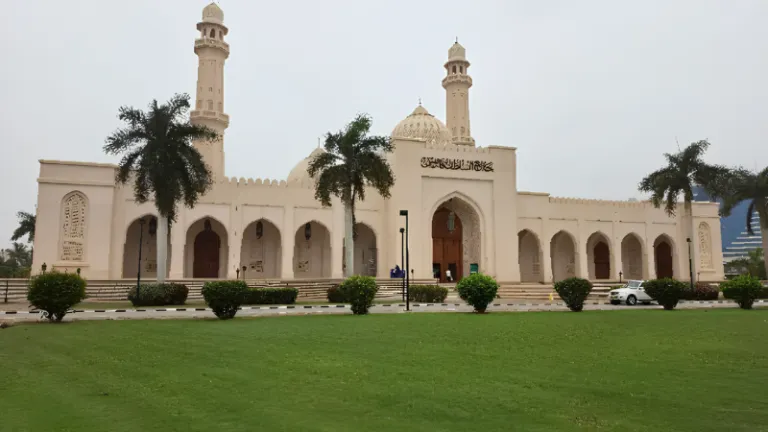 For a completely different side of Oman, head south to Salalah in the Dhofar Governorate. As the country's second-largest city, Salalah is known for its beautiful beaches, historical sites and unique seasonal landscapes.
What makes Salalah special is its Khareef season, the annual monsoon that usually takes place between June and September. While much of the Arabian Peninsula experiences hot and dry weather, the Dhofar Mountains turn green, with misty hills, flowing springs and seasonal waterfalls creating a landscape that feels surprisingly different from the rest of Oman.
Outside the Khareef season, Salalah still has plenty to offer. From September to June, the city's coastline is known for its sunny weather and beautiful white-sand beaches along the Arabian Sea.
The region also has a fascinating history connected to the ancient frankincense trade. For centuries, its natural harbours and valuable frankincense attracted merchants and travellers from different parts of the world. Today, you can still discover this heritage through local markets, archaeological sites and cultural attractions around Dhofar.
For Muslim travellers, Salalah offers a relaxed atmosphere where you can explore the region's natural beauty, enjoy local halal food and discover another part of Oman's Islamic and cultural heritage.
Location: Dhofar Governorate, southern Oman
Highlights: Khareef season, green mountains, waterfalls, white-sand beaches and frankincense heritage
Best time to visit: June–September for the Khareef landscape; other months for sunny coastal experiences
Also read: Complete Guide to the Dress Code in Saudi Arabia for Tourists
Ready to Explore Oman for the First Time?
From the impressive Sultan Qaboos Grand Mosque and historic Nizwa Fort to the turquoise pools of Wadi Bani Khalid and the golden dunes of Wahiba Sands, Oman has so much to offer beyond what you might expect from a Middle Eastern destination. For Muslim travellers, its welcoming culture, Islamic heritage and local traditions make the journey even more meaningful. So, if you are planning your first holiday in the Sultanate, start adding these places to your itinerary and get ready to experience Oman's beautiful mix of history, nature and warm Omani hospitality.
Published at
About Author
Subscribe our Newsletter
Get our weekly tips and travel news!
Recommended Articles
10 Muslim-friendly Theme Parks Around the World Beyond Luxurious Getaways: Here Are More Things to Experience in the Maldives What else can you do in the Maldives aside from soaking in the ambience of your overwater villa?
Top Muslim-Friendly Destinations in 2022 With The Most Affordable Plane Tickets Your post-pandemic adventures await!
The Essential Muslim-Friendly Guide to Things to Do in Sydney and Beyond Let’s explore beautiful Sydney together!
The Best Muslim-Friendly Destinations to Visit for Thrilling Experiences Chase your next adrenaline rush in the best Muslim-friendly destinations for adventure seekers.
Latest Articles
A Garden Illuminated: Enjoy the Year-End Glow at PARKROYAL COLLECTION Marina Bay, Singapore Enjoy a Muslim-friendly year-end getaway at PARKROYAL COLLECTION Marina Bay, Singapore, with halal-certified festive dining at Peppermint
10 Free Things to Do in Kyoto for Muslim Travellers to Keep Your Japan Trip Budget-Friendly This is how you save money on your Japan itinerary.
First-Timer’s Guide to Shibuya: Shopping, Food, and Top Attractions for Muslim Travellers From Shibuya Crossing to halal ramen spots!
15 Things to Do in Antalya, Türkiye for Muslim Travellers’ First Trip Make the most of your first Antalya adventure!
10 Free Things to Do in Johor Bahru That Muslim Travellers Should Definitely Try You can actually have fun without spending a single cent!