

From Korean-style BBQ and Punjabi curries to award-winning shrimp Pad Thai, take your pick from these amazing Halal restaurants in Bangkok.
Bangkok Declares State of Emergency Due to Flooding: Essential Travel Guidance for Muslim Travellers

A state of emergency has been officially declared in Bangkok following three consecutive days of relentless downpours starting Thursday, September 26, 2026. The resulting floodwaters have impacted tens of thousands of homes, disrupted local transit systems, and affected daily routines across all 50 districts of the city.
Also read: The Perfect Guide for Muslim Travellers in Bangkok: Hotels, Dining, and Mosques
In response to the widespread situation, local authorities designated September 28–29, 2026, as special public holidays across four major provinces: Bangkok, Nonthaburi, Pathum Thani, and Samut Prakan. This temporary measure helps keep non-essential traffic off the roads, allowing emergency vehicles and rescue crews to navigate affected areas smoothly.
Swift Government Action & Safety Measures
 Image credit: gdagys | Canva Pro
With September marking the peak of Thailand's rainy season, weather forecasts indicate continued rainfall across much of the region. Prime Minister Anutin Charnvirakul has instructed all relevant agencies to coordinate closely to support local residents and visitors alike. Key relief and emergency measures currently underway include:
Military Assistance: Army trucks have been deployed to flooded zones to transport essential supplies and assist with evacuations where needed.
Free Parking Access: Government facilities with open parking lots are offering free spaces.
Utility Reliability: Regular tap water quality checks are actively conducted, accompanied by backup power protocols to mitigate sudden outages.
Support for Vulnerable Groups: Medical response units and ambulances are on standby to transfer patients and elderly residents to care facilities.
Bangkok Governor Chadchart Sittipunt shared that once the heavy rain subsides, floodwaters are expected to clear within two to three days. Encouraging residents and travellers to remain calm, he emphasized that the current conditions are not expected to reach the severity of the major 2011 floods.
Nonetheless, many locals have been stocking up on household staples at nearby convenience stores and markets as a precaution against potential supply delays.
Airport Operations & Transport Information for Travellers
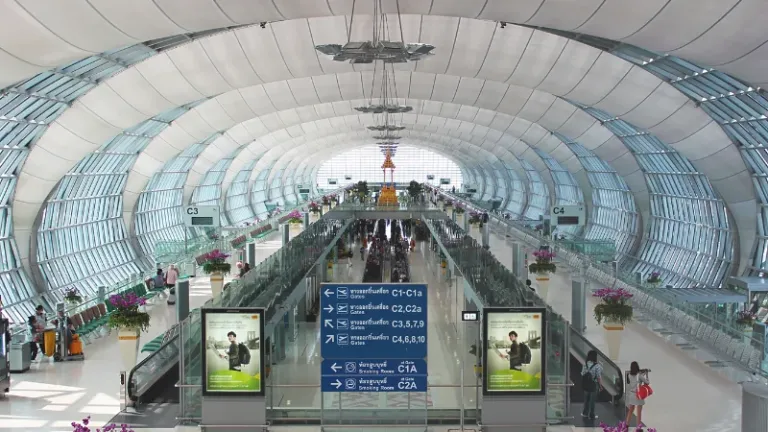 Image credit: Dmitri Pronchenko | Canva Pro
For travellers with upcoming flights or transit plans, the Tourism Authority of Thailand (TAT) has confirmed that major tourism services and public infrastructure across Bangkok remain operational. However, conditions vary depending on the area, and localized road flooding may cause traffic delays. Travellers are advised to build extra travel time into their itineraries and check live transit updates before setting out.
Here is the current operational status for Bangkok’s airports and urban transit networks:
Suvarnabhumi International Airport (BKK)
Suvarnabhumi Airport continues to operate normally, with primary access roads open to traffic. However, travellers are strongly advised to avoid the Lat Krabang route due to significant waterlogging. Instead, opt for Motorway No. 7 or the Burapha Withi Expressway.
Airport management recommends that international passengers arrive at least 3 hours prior to departure, while domestic travellers should allow at least 2 hours. The Airport Rail Link (ARL) remains a reliable transit choice, connecting central Bangkok directly to the airport terminal while bypassing highway congestion.
Don Mueang International Airport (DMK)
Don Mueang Airport is also fully open and operational. Travellers arriving or departing by road are encouraged to use the Don Muang Tollway, which offers direct access to the passenger terminals and bypasses flooded surface roads.
BMTA airport express buses (Routes A1–A4) continue to run, though minor schedule delays may occur. Passenger pick-up and drop-off points have been temporarily relocated to the airport's Service Hall. Standard metered taxi stands at the airport are temporarily suspended, but travellers can utilize the SRT Red Line train (Krung Thep Aphiwat–Rangsit route), which stops directly at Don Mueang and connects seamlessly to Bangkok's wider urban rail network.
Navigating Around Bangkok
When traveling within central Bangkok, urban rail systems like the BTS Skytrain and MRT Subway remain the most efficient way to travel. Both networks are running on normal schedules, offering a smooth alternative to flooded or congested roadways. Keeping an eye on local news updates will help you stay informed of any real-time adjustments.
Read also: Where to Find Mosques and Prayer Spaces in Bangkok for Muslim Travellers
For anyone currently in Bangkok or arriving in the coming days, flexibility is key. Keeping track of weather forecasts, allowing extra time for transit, and prioritizing safety during outdoor activities will help keep your journey smooth and comfortable.
Cover image credit: gdagys | Canva Pro
Published at
About Author
Jeihan Azalea
Jeihan is an ambitious explorer who travels the world with a pen in her hand.
Subscribe our Newsletter
Get our weekly tips and travel news!
Recommended Articles
10 Halal Restaurants in Bangkok to Satisfy Your Thai Cravings Al Meroz: A Muslim-Friendly Hotel in Bangkok, Thailand Great news for Muslim travellers: Thailand’s first halal hotel is now open to the public!
Top 7 Halal Snacks to Buy in Bangkok’s Big C Supercenter A collection of all the yummiest halal snacks you can get in Bangkok – from salty to spicy, sweet to exotic, there’s bound to be something for everyone!
Tourism New Zealand Adds 289 Restaurants & Cafes to Its Halal Food Guide! Muslim foodies, make New Zealand your next travel destination now!
Halal Food in Bangkok: 15 Places to Visit When You’re Hungry These Muslim-friendly dining options will ensure you don’t miss out! It’s high time to go on a food hunt for delicious halal food in Bangkok.
Latest Articles
8 Day Trips From Tokyo for Muslim Travellers to Elevate Your Japan Itinerary It's your sign to travel outside Tokyo!
The Perfect Guide for Muslim Travellers in Bangkok: Hotels, Dining, and Mosques Exploring Thailand’s vibrant capital wouldn't be complete without this guide!
Seoul Muslim Travel Guide: From Halal Eats and Prayer Spaces to Top Shopping Spots Shop till you drop, feast on delicious halal food, and find prayer rooms easily with this guide!
8 Muslim-Friendly Snacks in Tokyo You Should Try Discover 8 Muslim-friendly snacks in Tokyo, from senbei and yaki imo to halal chiffon cake, taiyaki, crepes, and street kebabs
10 Halal Restaurants in Shibuya, Tokyo for Muslim Travellers Discover 10 halal and Muslim-friendly restaurants in Shibuya, Tokyo, from halal Wagyu ramen and yakiniku to shabu-shabu and curry