
Looking for cheap, good and Halal food in Orchard Road? You can get a full meal under $10 at these awesome local eateries!
Kazakhstan vs Kyrgyzstan: Which Central Asian Gem Should You See First As a Muslim Traveller?
For many travellers setting their sights on Central Asia for the first time, the same question often comes up: Should you visit Kazakhstan or Kyrgyzstan first? Both countries offer surreal landscapes, rich Silk Road history, friendly cultures, and surprisingly easy Muslim-friendly travel conditions. Yet they deliver such different experiences that deciding where to begin can feel like choosing between two completely different styles of adventure. Here’s how both destinations compare across attractions, culture, food, nature, and overall vibe, so you can make the choice that’s right for you.
Also read: Turkmenistan: The World’s Most Mysterious Country
Main attractions
Kazakhstan
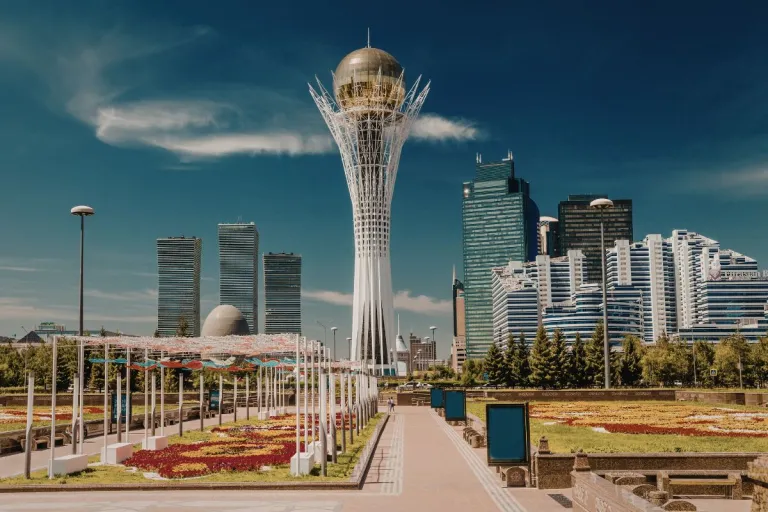
Image credit: Smaranda Dragan | Canva Pro
Kazakhstan impresses first with scale, both in size and aesthetic. The country seamlessly blends futuristic architecture, modern city planning, and dramatic natural landscapes. In Almaty, cosmopolitan streets are lined with cafés, boutique shops, leafy parks, and architectural gems like the colourful Ascension Cathedral in Panfilov Park. From here, travellers can easily escape the city to extraordinary landscapes such as the turquoise waters of Big Almaty Lake, the alien rock formations of Charyn Canyon (often described as Kazakhstan’s own version of the Grand Canyon), and the singing dunes and wildlife-rich plains of Altyn-Emel National Park. Further north in Astana (formerly Nur-Sultan), the atmosphere shifts to something almost sci-fi with landmarks like the Baiterek Tower, pyramid-like Palace of Peace, and Khan Shatyr, a colossal transparent tent-shaped mall dominating the skyline.
Kazakhstan is incredibly diverse, with landscapes far beyond the stereotypical steppe: glacial lakes, deep canyons, pine forests, multicoloured deserts, wetlands, sand dunes, and even Caspian Sea beaches. The south evokes Switzerland or Arizona with towering snow-covered peaks and red-rock canyons, while the east boasts the Altai Mountains with peaks over 4,000 meters, and the southeast features 5,000-year-old UNESCO petroglyphs at Tamgaly. Summers are hot (35–37°C in Almaty, Aktau, Turkistan) and winters extremely cold (Astana can reach −20°C), so spring (May–June) is the most comfortable time to visit.
Train travel across Kazakhstan is an adventure in itself, offering a chance to traverse the vast steppe. Talgo trains (130 km/h) and slower Soviet-era trains (100 km/h) connect main cities, with first-class cabins from $70 or cheaper options from $13. Domestic flights are affordable ($50–120) and allow faster travel, but the rail journey is unmatched for experiencing the country’s scale and landscapes.
Also read: 12 Breathtaking Destinations in Kazakhstan: A Muslim Traveller's List
Kyrgyzstan
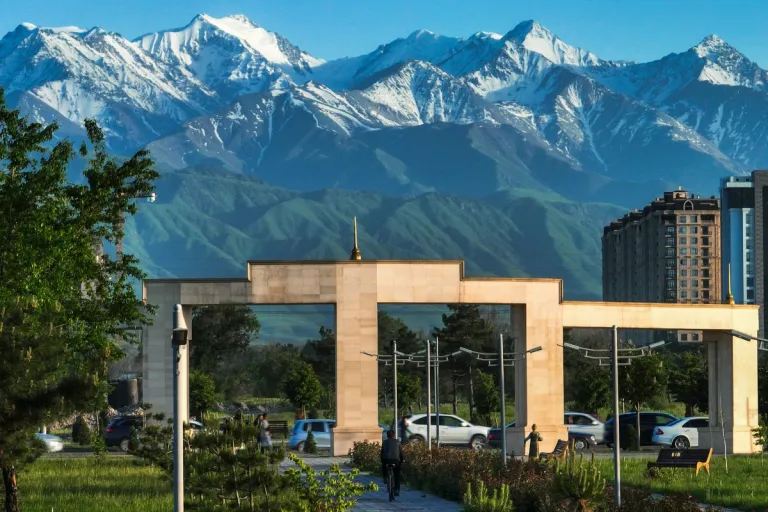
Image credit: Collab Media | Canva Pro
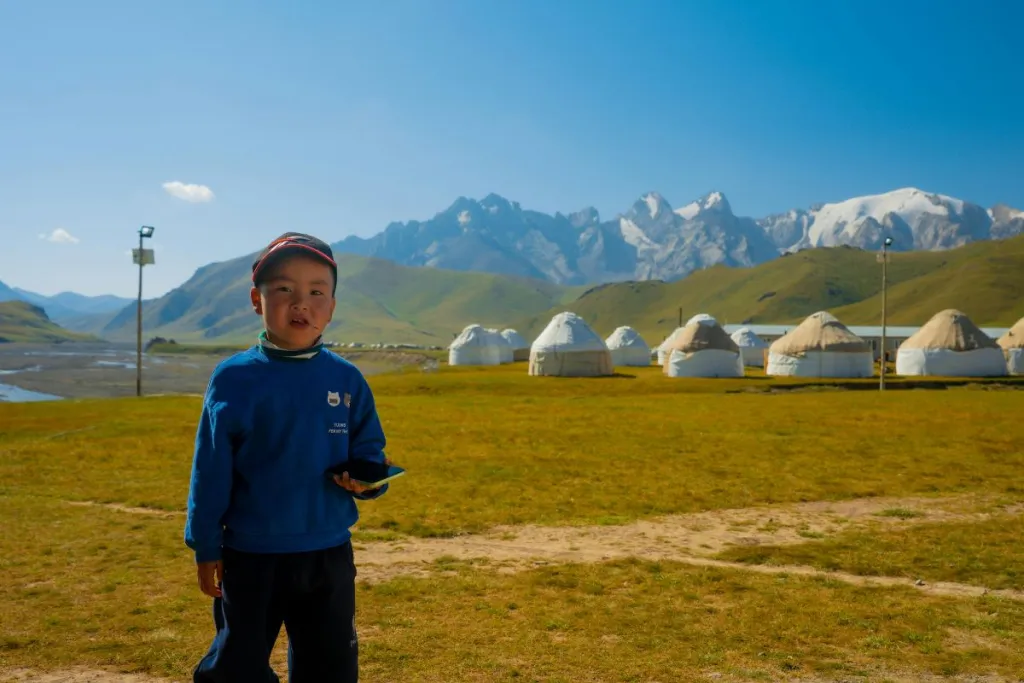
Kyrgyzstan offers a completely different entry point to Central Asia. While Bishkek introduces visitors to wide Soviet-era boulevards, leafy parks, and a relaxed city rhythm, the real magic lies beyond the city. Kyrgyzstan’s appeal is deeply tied to its mountains, valleys, and nomadic traditions. Travellers venture east to Karakol for trekking, skiing, and yurt experiences, or to the enormous Issyk-Kul Lake, one of the world’s largest alpine lakes framed by beaches and snow-capped peaks. Further inland, Song-Kul Lake becomes a summer pasture for nomadic herders, where overnight stays in yurt camps offer stargazing, horseback riding, and an up-close glimpse into traditional life. For those short on time, the fact that Ala-Archa National Park sits just 30–45 minutes from Bishkek makes Kyrgyzstan particularly appealing for travellers wanting immediate access to nature.
Beyond the basics, Kyrgyzstan is extremely accessible for independent travellers: most Western nationalities (EU, US, UK, Canada, etc.) can enter visa-free for up to 60 days. The best time to visit is July to September, as many high mountain passes are closed by snow outside of these months. Transport is practical though rustic. Marshrutkas (shared minibuses) form the backbone of intercity travel, while shared taxis are faster but pricier. For remote valleys and lakes like Ala-Kul or the Pamir Highway region, hiring a 4x4 or local driver is often necessary. Accommodation is primarily offered through yurt stays and homestays, particularly via the Community-Based Tourism (CBT) network, which ensures authentic experiences while supporting local families.
Key highlights for adventure travellers include:
Pamir Highway: a high-altitude road adventure across rugged terrain.
Song-Kul Lake: the ultimate nomadic yurt experience with horse riding and stargazing.
Karakol: the trekking hub for Ala-Kul and nearby alpine adventures.
Ala-Archa National Park: perfect for day hikes near Bishkek.
Skazka (Fairytale) Canyon & Jeti-Oguz: dramatic rock formations ideal for photography and short excursions.
Halal food & Muslim-friendly essentials
Kazakhstan
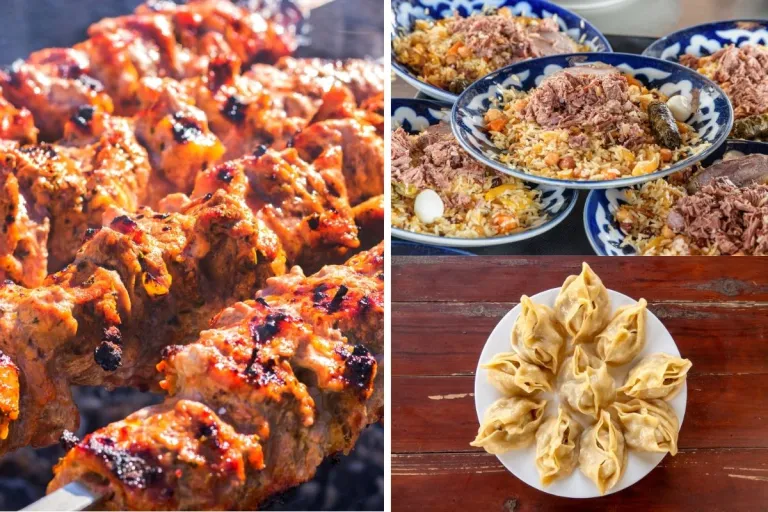
Image credit: Romienaz, efired, onlyfabrizio | Canva Pro
Both nations are Muslim-majority countries, which makes halal dining highly accessible for visitors. In Kazakhstan, Almaty and Astana offer numerous halal-certified restaurants serving both traditional dishes and international options. Travellers can expect staples like beshbarmak (noodles with boiled meat), lagman (a Uyghur-style hand-pulled noodle dish), shashlik skewers, manty dumplings, and plov. Urban areas also feature halal fast food, cafés, and dessert shops. For prayer, mosques are well distributed, including the monumental Hazrat Sultan Mosque in Astana, one of the largest in Central Asia, and the Central Mosque of Almaty, a notable religious landmark close to the city centre. Malls, airports, and public buildings often provide suitable spaces for prayer or quiet corners where travellers can perform it without difficulty.
Central Asian cuisine is one of Kazakhstan’s highlights. Other dishes include baursak (deep-fried dough balls), khachapuri shashlik, and kazy (smoked horse sausage). Horse meat is widely eaten, with beshbarmak as the national dish. Camel and mare milk are also available but less popular. The country is extremely affordable: high-end meals with alcohol can cost $15, lunch $2, dorm beds $5–9, boutique hotels $25–40, and first-class trains $70.
Kyrgyzstan
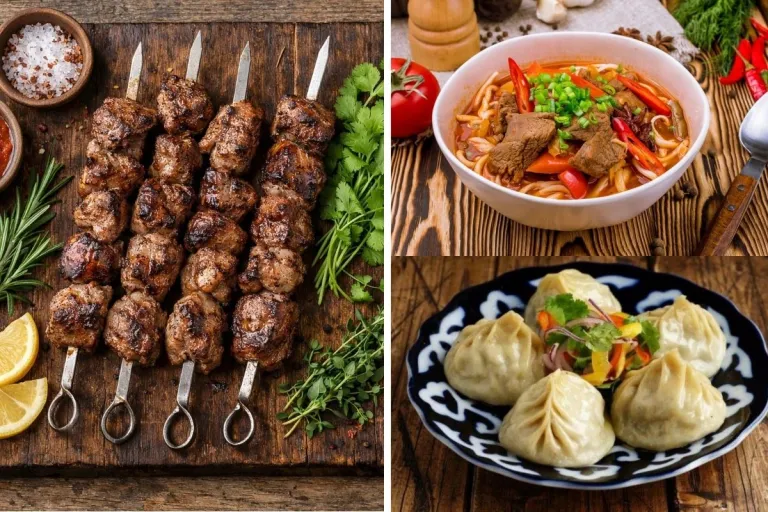
Image credit: The Spirit of Kyrgyz | Official Website
Kyrgyzstan is similarly welcoming for Muslim travellers, especially in cities like Bishkek and Karakol, where halal eateries and bakeries are easy to find and sometimes even marked with visible signage. Traditional Kyrgyz cuisine is halal by default, with familiar regional staples such as samsa (meat pastries baked in tandoor ovens), plov, shashlik, beshbarmak, and freshly baked bread served throughout the day. Vegetarians and flexitarians will find no shortage of soups, salads, and dairy dishes. Mosques are present across cities and towns, with Bishkek’s Central Mosque standing as the largest and most striking example. Travellers are encouraged to try Kumis (fermented horse milk) and local dairy products when visiting yurt camps. For Muslim travellers, both destinations eliminate the typical halal-travel stress points; halal food and prayer access are simply not barriers here.
Nature & day trips
Kazakhstan
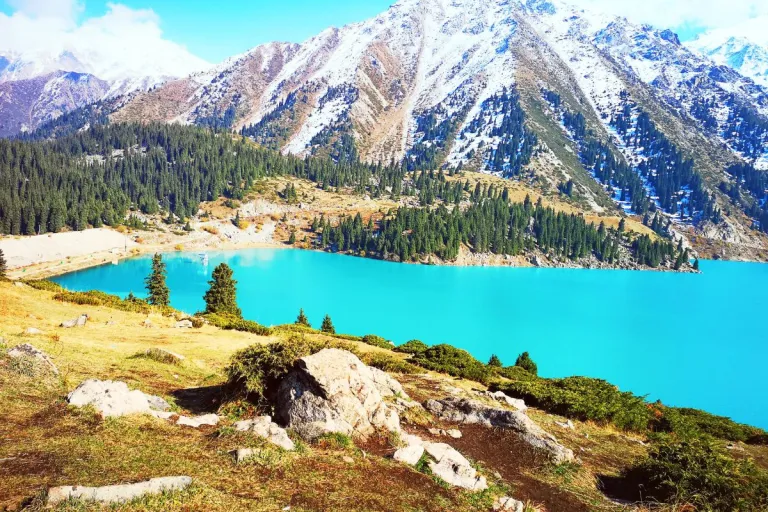
Image credit: Photoprofi30 | Canva Pro
Nature is where both countries shine, but in very different ways. Kazakhstan’s natural landscapes are vast, diverse, and often require longer drives, but reward with cinematic panoramas. A popular route from Almaty links Charyn Canyon, Kolsai Lakes, and Kaindy Lake in a single two or three-day loop, offering canyon sunsets, pristine alpine lake hikes, and the surreal sight of Kaindy’s submerged spruce forest rising straight out of turquoise waters. Closer to the city, Turgen Gorge provides waterfalls, forest trails, and picnic sites without requiring significant road time, while the Tian Shan mountain range provides trekking and skiing opportunities depending on the season. Other attractions include Altyn Emel National Park, Shymbulak ski resort, Medeu ice rink, and the Aktau Mountains with their rainbow-coloured stripes.
Kyrgyzstan
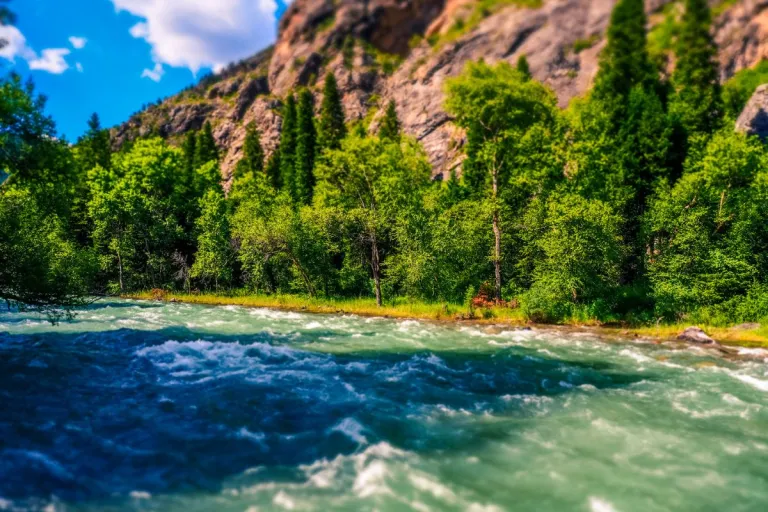
Image credit: Freda Bouskoutas | Canva Pro
Kyrgyzstan, on the other hand, offers nature that feels more intimate, raw, and culturally immersive. Day trips from Bishkek allow travellers to enter mountain parks, valleys, and gorges in under an hour, and long-distance trips introduce overnight yurt stays, horseback expeditions, and scenic lake circuits. Issyk-Kul Lake serves as a natural playground for swimming, sailing, hot spring visits, and winter skiing on the Karakol side. Meanwhile, Song-Kul represents the epitome of Kyrgyz nomadic culture, a remote high-altitude lake accessible only in summer, where life moves to the rhythm of grazing horses, crackling fires, and endless stars. The southern shore of Issyk-Kul is more authentic and rugged, perfect for eagle hunting demonstrations and hiking, while the northern shore is developed for beach relaxation and petroglyph visits. The Pamir Highway and Skazka & Jeti-Oguz rock formations offer high-adventure options for seasoned travellers. Kyrgyzstan is also high-altitude; hikers should prepare for steep climbs, sudden temperature drops (hot days, freezing nights), and carry mountain water or a filter.
Cities & vibes
Kazakhstan
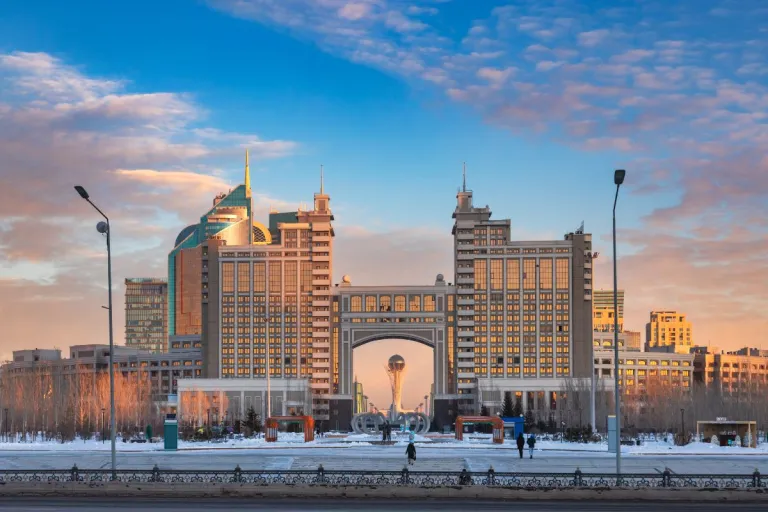
Image credit: Dmitry Naumov | Canva Pro
Urban appeal is one of Kazakhstan’s strongest differentiators. Almaty is lively, stylish, and increasingly creative, filled with museums, malls, modern transport, trendy cafés, and an emerging youth culture. The city is clean, safe, and full of greenery, parks on every block, tree-lined streets, and the Botanic Garden offer shade and mountain vistas. Attractions include the Almaty Metro (stations like Auezov Theatre, Zhibek Zholy, and Baikonur feature Soviet mosaics and space-themed décor), Kok Tobe hill, and fountains celebrated on Fountain Day (May 25–Oct 25). The city is also surprisingly Beatles-obsessed, with statues, tribute festivals, and themed events. Astana is even more distinct, a futuristic desert city that feels like a Central Asian Dubai-meets-urban-planning experiment, where the “batshit insane” architecture includes buildings shaped like eggs, beer cans, and Chupa Chups. Turkistan offers Silk Road heritage with the Mausoleum of Khoja Ahmed Yasawi, echoing Uzbekistan’s style but uniquely Kazakh.
Kyrgyzstan
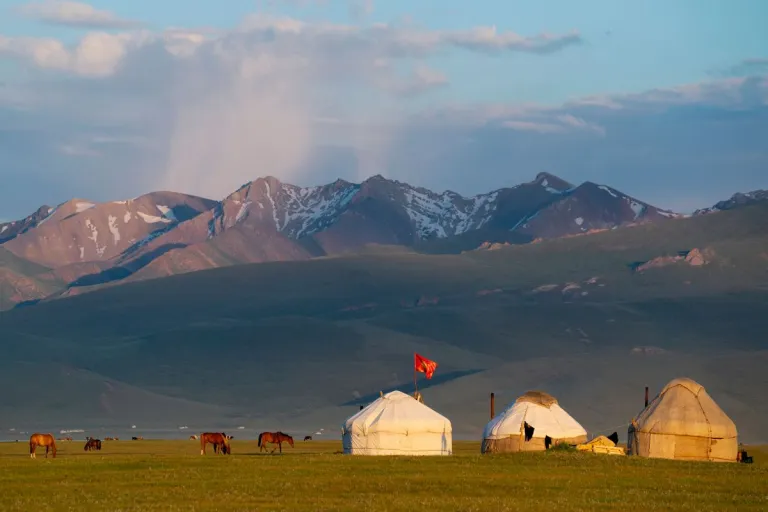
Image credit: Ethan Johnson | Canva Pro
Kyrgyzstan is noticeably more rustic, with cities serving as functional hubs rather than attractions in their own right. Bishkek offers relaxed parks, art museums, and markets, but it rarely tries to impress; instead, it directs you outward into the mountains. This simplicity is part of its charm. Travellers who value authenticity, slower rhythms, and nature-driven itineraries often find Kyrgyzstan refreshingly uncomplicated. The nomadic spirit is everywhere, from yurt camps and horse riding opportunities to the emphasis on local guides and “Leave No Trace” ethics in mountain treks. English is less commonly spoken outside major towns; Russian is the lingua franca for most travel interactions, while Kyrgyz is spoken in rural areas.
Cost & accessibility
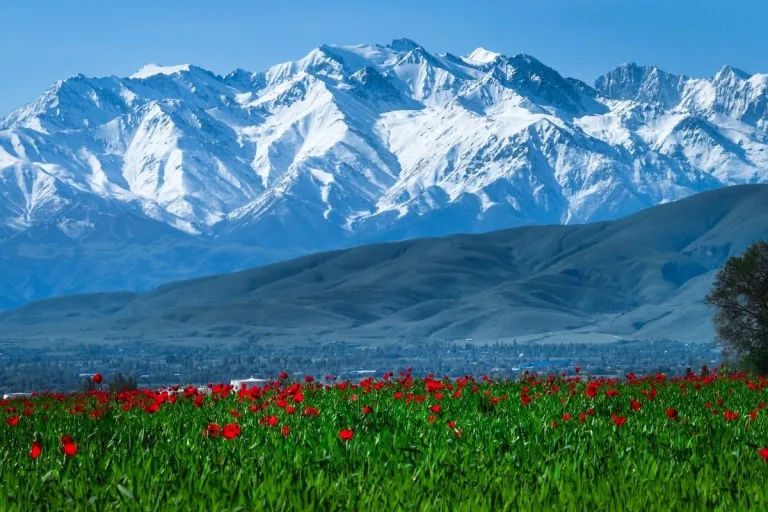
Image credit: Collab Media | Canva Pro
Both countries remain affordable compared to East Asia, the Middle East, or Europe, although Kyrgyzstan tends to be the more affordable of the two, especially for accommodation, transportation, and tours. Kazakhstan offers stronger infrastructure overall, with more international flight connections, better highways between major cities, and more modern domestic airports. Most nationalities can get free 45-day e-visas on arrival in Kazakhstan. Visa rules are reasonably traveller-friendly in both destinations.
For English speakers, communication in Kazakhstan may be a challenge: Russian is dominant in cities and Kazakh in rural areas. Learning the Cyrillic alphabet and using Google Translate enhances the experience. Apps like Yandex Go facilitate city transport, especially in Astana. In Kyrgyzstan, basic Russian or Kyrgyz phrases are highly recommended, and travellers should carry cash for rural areas, as ATMs are scarce outside cities.
Winter vs summer
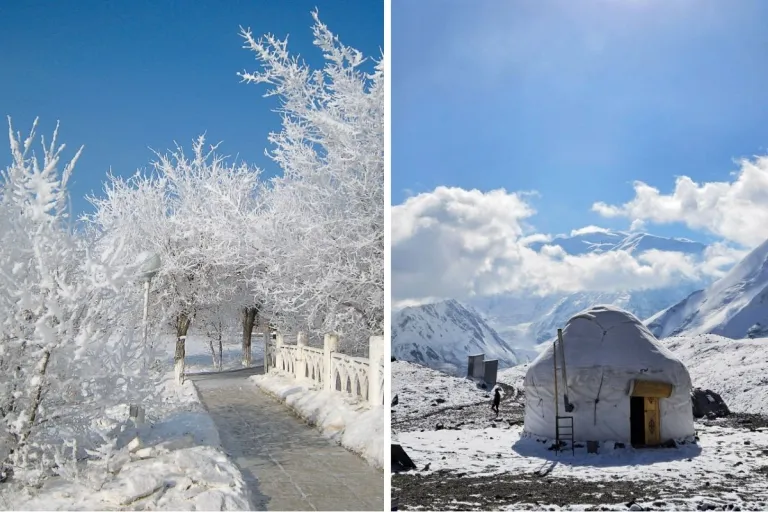
Image credit: Owsigor; Jesse Blackburn | Canva Pro
Seasonality changes the experience dramatically. Kazakhstan transitions smoothly between seasons, offering skiing in Shymbulak during winter and canyon-hopping, lake trekking, and mountain excursions throughout summer. Kyrgyzstan is most alive in summer when yurt camps open around Issyk-Kul and Song-Kul. Winter brings colder temperatures but rewards skiers and winter trekkers with affordable powder and fewer crowds. Trekking and high-altitude routes are only viable from late June to early September, and outside this window, many passes close due to snow.
Also read: Top Airbnbs in Almaty, Kazakhstan: Stylish Stays With Amazing Views
The HalalZilla verdict
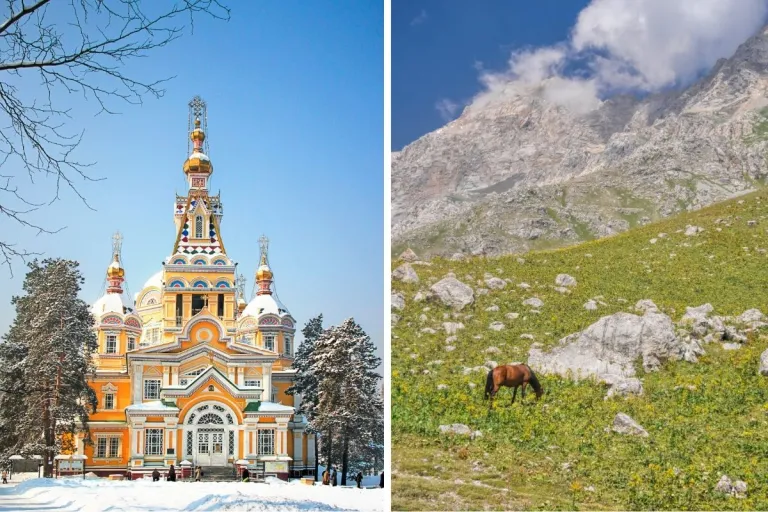
Image credit: Photoprofi30; Misoknitl | Canva Pro
So which should you visit first? The honest answer: both are fantastic, it just depends on your travel personality. Kazakhstan is ideal for travellers who enjoy modern cities, diverse landscapes, and strong infrastructure with an urban-nature balance. Kyrgyzstan, by contrast, is the destination for those seeking raw landscapes, nomadic culture, horseback adventures, yurt stays, and a slower pace outdoors. For Muslim travellers, both are extremely accommodating in terms of halal food, prayer access, and cultural familiarity, making Central Asia an unexpectedly easy region to explore.
If Kazakhstan feels like the polished metropolitan face of Central Asia, Kyrgyzstan feels like its rugged beating heart, a place where marshrutkas, CBT homestays, Pamir highways, high-altitude lakes, and nomadic life combine into an adventure unlike anywhere else. Whichever path you choose, Central Asia promises one thing for sure, you’ll leave already planning your return.
Published at
About Author
Aimi Zulkiflee
Aimi is the ultimate daydreamer with a flair for adventure and an avid novel reader with a soft spot for all things fairytale. She is known for her friendly demeanor, albeit with a bit of a short temper. Forever striving to live her cutesy yet demure life.
Subscribe our Newsletter
Get our weekly tips and travel news!
Recommended Articles
10 Cheap Halal Food and Restaurants in Orchard Road Useful Tips for Travelling During Ramadan Do you or anyone you know face difficulties whilst travelling during Ramadan? We’ve got you covered!
10 Halal Restaurants in Bangkok to Satisfy Your Thai Cravings From Korean-style BBQ and Punjabi curries to award-winning shrimp Pad Thai, take your pick from these amazing Halal restaurants in Bangkok.
Al Meroz: A Muslim-Friendly Hotel in Bangkok, Thailand Great news for Muslim travellers: Thailand’s first halal hotel is now open to the public!
Muslim Travel: 5 Things to Do in Dubai For Adrenaline Junkies Dubai is worth far more than a layover – This wondrous city has plenty to offer! Here are some exciting activities in Dubai for the Adrenaline Junkies!
Latest Articles
15 Best Instagrammable Photo Spots in Makkah and Madinah to Capture Your Umrah Memories Discover the best Instagrammable photo spots in Makkah and Madinah to capture beautiful and meaningful memories during your Umrah journey
8 Halal Souvenirs from Bandung That Are Worth Bringing Home Discover 8 halal souvenirs in Bandung, from viral cheese desserts and banana cakes to sourdough, coffee, and classic Bandung snacks
Kuala Lumpur International Airport Guide for First-Time Muslim Travellers to Malaysia Plan your first trip through KLIA with this Muslim traveller guide, covering immigration, transport, halal food, prayer rooms, and useful airport tips
10 Halal Indonesian Restaurants in Perth, Australia Muslim Travellers Should Try Discover 10 halal Indonesian restaurants in Perth, Australia, serving rendang, ayam penyet, bakso, satay, and more Muslim-friendly favourites
Halal-Certified Cafes & Restaurants in Bandung for a Delicious Food Trip Discover halal-certified cafes and restaurants in Bandung, serving delicious Indonesian, Western and Asian dishes perfect for Muslim travellers