

Looking for cheap, good and Halal food in Orchard Road? You can get a full meal under $10 at these awesome local eateries!
Muslim-Friendly Winter Guide to Shirakawago, Japan's Magical Snowy Village
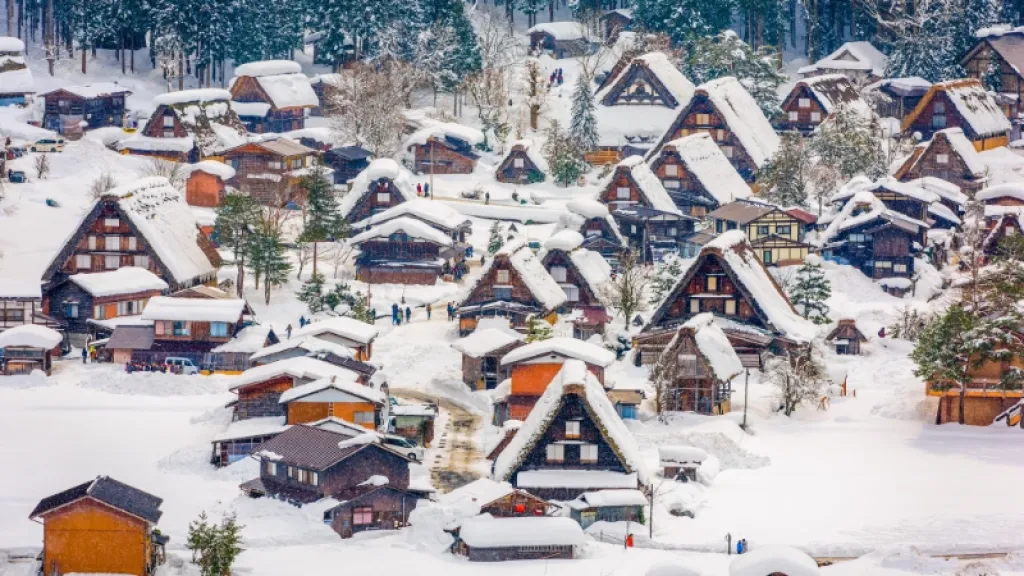
Winter in Japan offers an unparalleled magical charm, especially when a thick blanket of snow covers every corner of the country. If you are planning an unforgettable winter holiday, forget Tokyo and Osaka for a moment, and direct your journey to a mountain village that looks like it popped straight out of a storybook: Shirakawago.
Also read: Japan Now Offers Halal Bento Boxes on More Shinkansen Lines
This traditional village promises a visual experience that will take your breath away. From distinctive traditional architecture and annual events that transform the night into something special, to memorable sightseeing activities, this guide explains everything that makes Shirakawago a must-visit in winter.
Why You Must Visit Shirakawago in Winter
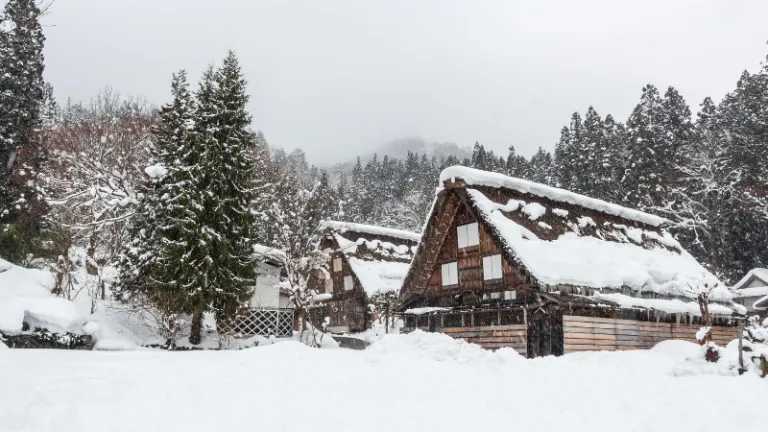 Image credit: Puwadol Jaturawutthichai | Canva Pro
What makes Shirakawago so special? Recognised as a UNESCO World Heritage Site, the village is famous for its traditional farmhouses called gassho-zukuri (gassho means 'hands in prayer'). These steep thatched roofs were specifically designed to withstand the weight of heavy winter snow, resulting in a unique and dramatic slope. When snow blankets the entire village, these houses transform into white formations that truly create a mesmerizing fairytale atmosphere.
 Image credit: Kok Horng Cheam | Canva Pro
Snow typically covers Shirakawago from December to March. Temperatures can be extreme, often dropping below freezing. Therefore, it is highly recommended to dress in layers and wear thick gloves, scarves, hats, and non-slip boots.
Additionally, there are strict rules to follow when visiting. Smoking is prohibited near the traditional houses due to their high flammability; designated smoking areas are provided. Lighting fireworks or bonfires is also strictly forbidden.
How to Get to Shirakawago
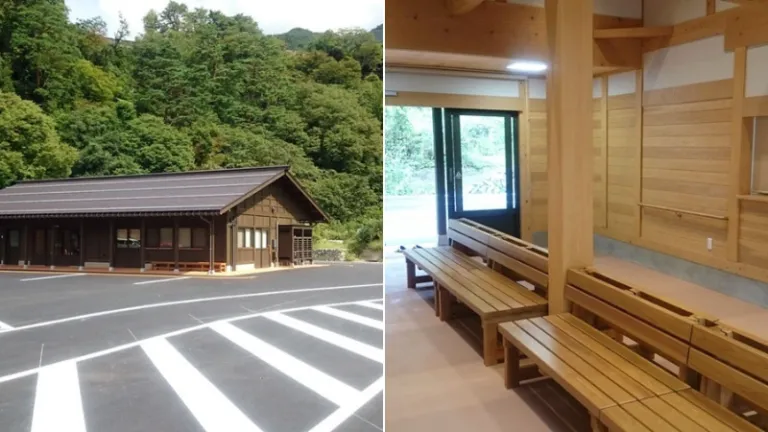 Image credit: Shirakawa Village | Official Website
Shirakawago is located in Gifu Prefecture, in a mountainous region that was once very remote. The village does not have a train station, so you must rely on buses. However, access is quite easy from major cities.
From Tokyo Station: Take the Hokuriku Shinkansen for about two hours to Toyama Station. From there, take a bus for 1 hour 20 minutes to the Shirakawago Bus Terminal.
From Shin-Osaka Station: Take the Tokaido Shinkansen for 1 hour to Nagoya Station. Then, take a bus for 2 hours 45 minutes to the Shirakawago Bus Terminal.
From Nagoya Station: Take the JR Limited Express Wide View Hida for 2 hours 20 minutes to Takayama Station. Then, take a bus for 1 hour to the Shirakawago Bus Terminal. Alternatively, head to the Meitetsu Bus Center near Nagoya Station to take a direct bus for 2 hours 30 minutes.
From Kanazawa Station (Fastest): You only need to take a bus for 1 hour 20 minutes to reach the Shirakawago Bus Terminal. No need to transfer!
Important Prayer Tips for Muslim Travellers
While Shirakawago is breathtaking, it does not currently have dedicated prayer facilities or mosques within the village. It is advisable to plan your prayers accordingly. You can pray in your hotel room if you are staying overnight, or utilize prayer facilities at major transit stations before or after your visit:
Toyama: The Toyama Muslim Center (TMC) is located near Toyama Station.
Tokyo: There is a dedicated prayer room inside Tokyo Station at the Marunouchi North Entrance.
Nagoya: Nagoya Mosque is accessible from Nagoya Station.
Kanazawa: While not immediately next to the station, the Kanazawa Umar bin Al-Khattab Masjid is reachable by a 30-minute bus ride or a 17-minute taxi ride.
Must-Do Activities in Shirakawago
1. Explore Historic Gassho-zukuri Houses
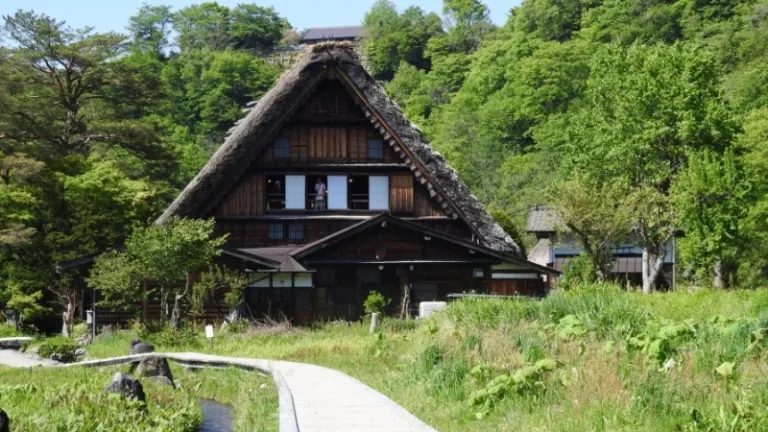 Image credit: Shirakawa-go Tourist Association | Official Website
An essential experience in Shirakawago is entering and exploring the unique architecture of a gassho-zukuri house from the inside. Several houses are open to the public as museums, allowing visitors to see firsthand how the steep roof structure withstands snow and how the traditional community lived.
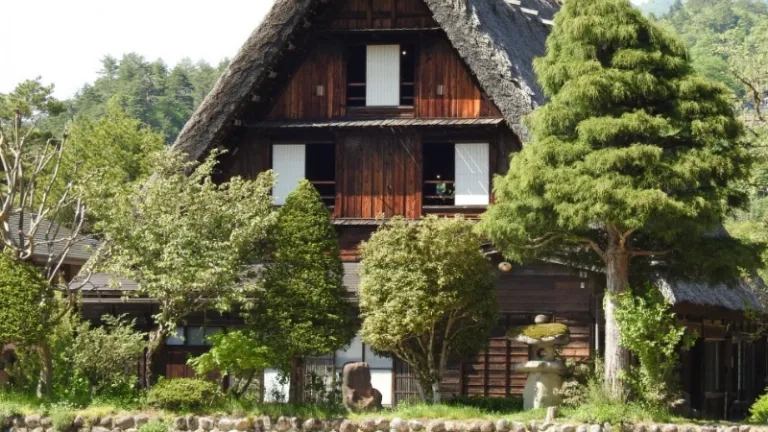 Image credit: Shirakawa-go Tourist Association | Official Website
The three most famous houses you must visit are Wada House, the largest and most historic in Ogimachi Village; Kanda House, known for its well-preserved interior structure, including a traditional fire pit; and Nagase House, which showcases five floors of artifacts such as farming tools and old medical equipment.
2. Discover Myozenji Museum
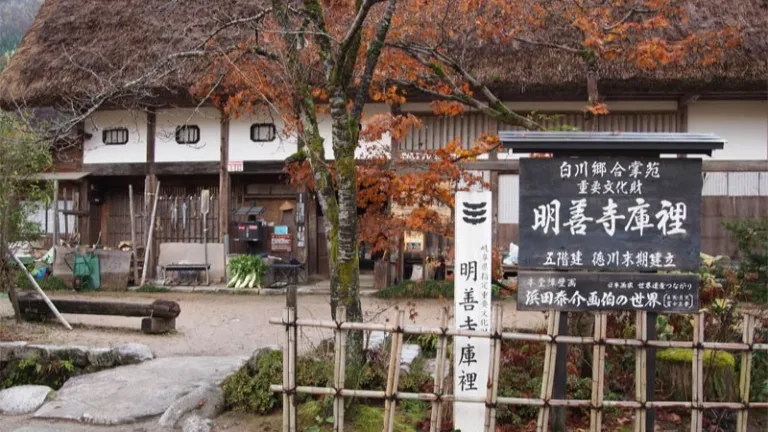 Image credit: Shirakawa Village | Official Website
The charm of Myozenji Museum lies in the fact that it is the largest Buddhist temple in the village built in the gassho-zukuri architectural style. The temple complex consists of a main hall and a unique bell tower, both featuring iconic thatched roofs. Visiting this museum allows you to see how spiritual values and local traditional architecture blend harmoniously, creating a peaceful and reflective atmosphere amidst the snow.
3. Stroll through the Gassho-zukuri Minkaen Outdoor Museum
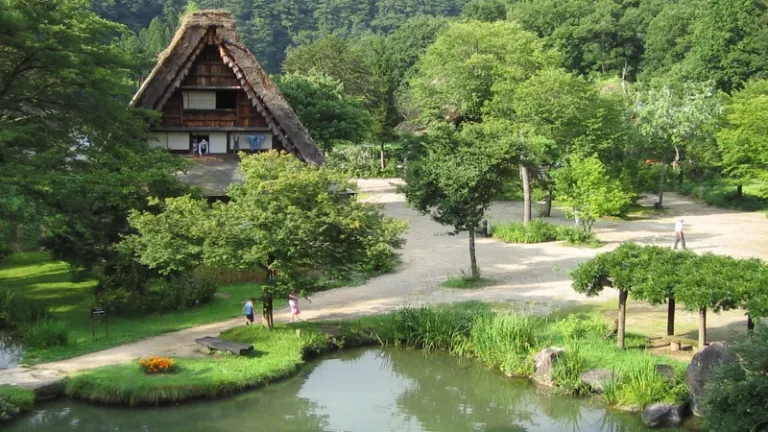 Image credit: Gasshozukuri Minkaen Outdoor Museum | Official Website
Located across the river from Ogimachi Village, this open-air museum offers a quiet escape. The Gassho-zukuri Minkaen Outdoor Museum is an area that houses about 25 gassho-zukuri houses relocated from various surrounding regions. The area is beautifully laid out with a peaceful rural atmosphere, making it an ideal place for a leisurely stroll, taking photos without crowds, and learning more details about this ancient architecture.
4. Enjoy the Panorama from Ogimachi Castle Ruin Observation Area
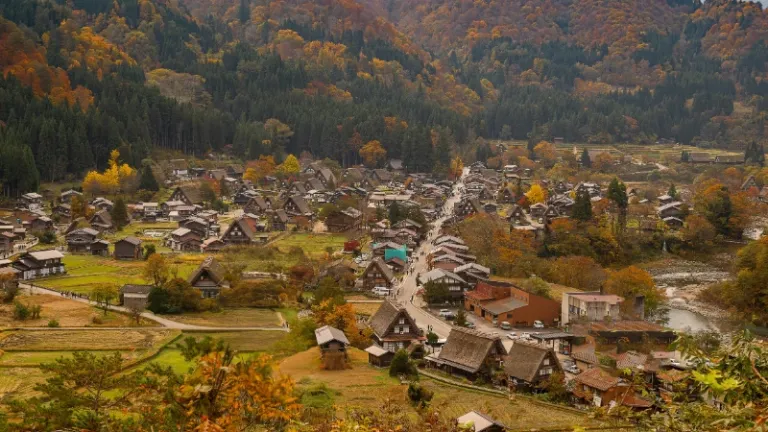 Image credit: Paulino Acosta Santana | Canva Pro
To get the most iconic view that is a favourite among tourists, you must go up to the Ogimachi Castle Ruin Observation Area. From this location, you will be treated to a spectacular panorama of the entire Ogimachi Village with white gassho-zukuri roofs neatly scattered in the valley below. Access to this observation deck can be by walking (be careful as it can be slippery) or by shuttle bus. It is recommended to come in the morning to avoid the crowds.
5. Experience the Magical Shirakawago Light-Up
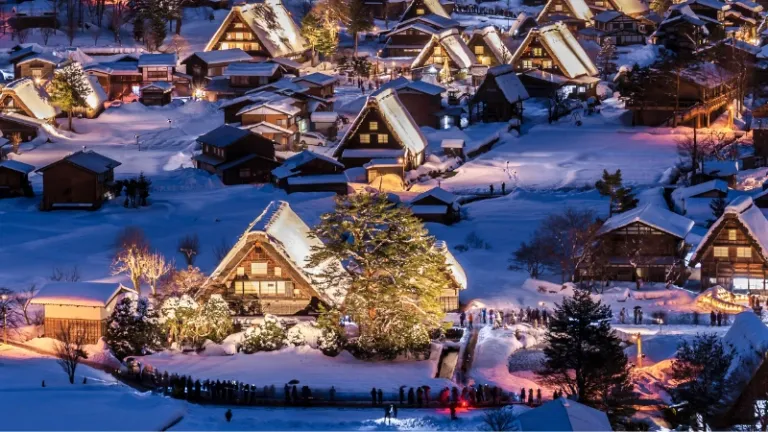 Image credit: Supparuj | Canva Pro
The Shirakawago Light-Up is the most anticipated annual event, where gassho-zukuri houses are illuminated at night on selected days in winter, creating a scene that truly resembles something out of a fantasy movie.
This event is highly exclusive and limited. To attend, you must secure a spot through a lottery system for overnight stays (usually months in advance), join a bus tour, or book a package through a travel agent. Without a valid reservation, entry to the event area at night is not permitted.
6. Explore Ainokura for a Quieter Alternative
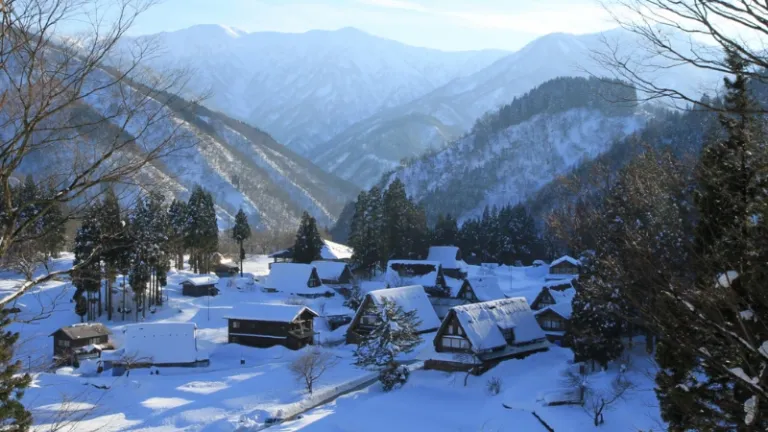 Image credit: Toyama Tourism Organization | Official Website
If Ogimachi is too crowded, consider visiting Ainokura in the Gokayama region, Toyama Prefecture (about a 30-minute drive away). Ainokura is a smaller gassho-zukuri village but offers a much quieter, more authentic, and less touristy atmosphere. The view of snow-covered houses in this valley is equally beautiful, providing a more intimate and peaceful experience.
7. Visit Shirakawa Hachiman Shrine
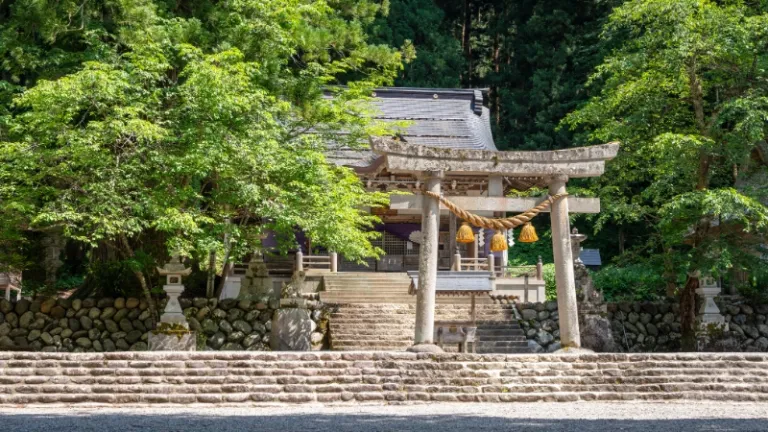 Image credit: Daboost | Canva Pro
As the oldest sacred site in the region, Shirakawa Hachiman Shrine has a very long history and serves as the spiritual guardian of the village. This Shinto shrine is located on a small hill and surrounded by trees, offering an incredibly serene atmosphere.
8. Relax Your Body in an Onsen
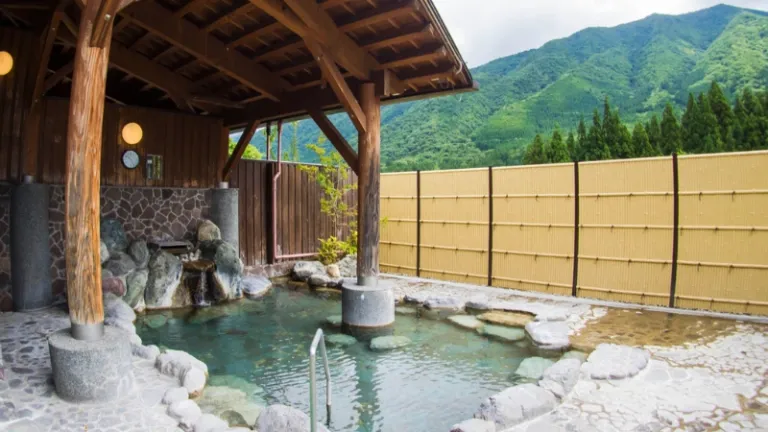 Image credit: Shiramizuno-Yu | Official Website
There is no better way to end a cold day than soaking in an onsen (hot spring). In Shirakawago, you can try Shirakawago No Yu, a public bathhouse located within the village itself. Another alternative is Shiramizu Onsen, located slightly outside the main area, offering a quieter atmosphere. Soaking in hot water while feeling the cold mountain air, or even watching the snow fall, is the pinnacle of winter relaxation.
Accommodation & Muslim-Friendly Dining in Shirakawago
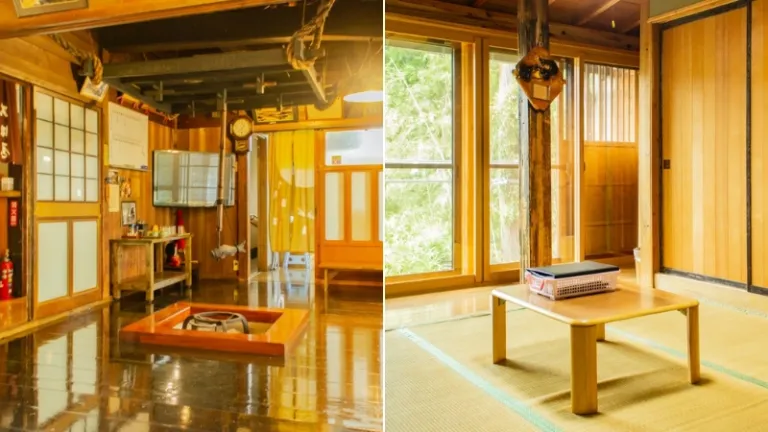 Image credit: Shirakawa-go Tourist Association | Official Website
While many visit for a day trip, staying overnight in a gassho-zukuri farmhouse offers a rare glimpse into traditional Japanese life. Reservations can be made directly on the official Shirakawago website.
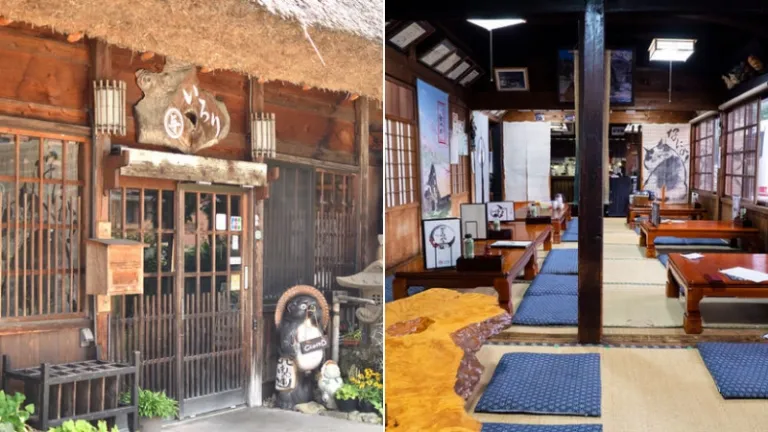 Image credit: Shirakawago-Irori | Official Website
When it comes to food, Shirakawago is famous for Hida Beef and Gohei Mochi. However, Muslim travellers need to be cautious as traditional preparation methods often involve mirin or non-halal sauces.
Fortunately, there are Muslim-friendly options available (reservation is often key!):
Soba Dojo: Offers a Muslim-friendly menu, but reservations are required.
Kita no Syou: Serves a Muslim-friendly Hoba Miso Chicken using halal ingredients. You must reserve at least 10 days in advance for them to prepare the dish.
156 Restaurant Lucky: Offers menu items that do not use pork.
Irori: Provides Muslim-friendly and vegetarian menu options.
Also read: New Suica Mobile App For iOS: A Game-Changer For Muslim Travellers in Japan
Shirakawago in winter is a masterpiece of nature perfected by unique human architecture. With the right preparation, your visit to this snow-covered village will be the most magical chapter of your trip to Japan. From the breathtaking light-up views to the warmth of the local onsen, Shirakawago is a destination you must visit at least once in your lifetime.
Published at
About Author
Jeihan Azalea
Jeihan is an ambitious explorer who travels the world with a pen in her hand.
Subscribe our Newsletter
Get our weekly tips and travel news!
Recommended Articles
10 Cheap Halal Food and Restaurants in Orchard Road Useful Tips for Travelling During Ramadan Do you or anyone you know face difficulties whilst travelling during Ramadan? We’ve got you covered!
10 Halal Restaurants in Bangkok to Satisfy Your Thai Cravings From Korean-style BBQ and Punjabi curries to award-winning shrimp Pad Thai, take your pick from these amazing Halal restaurants in Bangkok.
Al Meroz: A Muslim-Friendly Hotel in Bangkok, Thailand Great news for Muslim travellers: Thailand’s first halal hotel is now open to the public!
Muslim Travel: 5 Things to Do in Dubai For Adrenaline Junkies Dubai is worth far more than a layover – This wondrous city has plenty to offer! Here are some exciting activities in Dubai for the Adrenaline Junkies!
Latest Articles
10 Halal Ramen in Osaka Every Muslim Travellers Have to Try At Least Once Don't miss out on Japan’s iconic comfort food!
Experience Autumn Beauty: Visit These 10 Stunning Spots in Kyoto Experience Kyoto at its most gorgeous.
12 Free Attractions in Osaka, Japan to Make Your Trip More Budget-Friendly Save money on your Japan vacation!
10 Great Places to Shop for Souvenirs in Hong Kong: From Budget-Friendly Markets to Unique Keepsakes Bring home the best of Hong Kong!
8-Day Tokyo and Osaka Itinerary: From the Bustling Capital to Japan’s Kitchen Make your dream Japan trip come true!