
From savoury pancakes to refreshing rice punch, be sure to hunt down these delectable Muslim-friendly Korean goodies on your next trip to Seoul!
South Korea Extends K-ETA Exemption Until 2026: What Muslim Travellers Need to Know
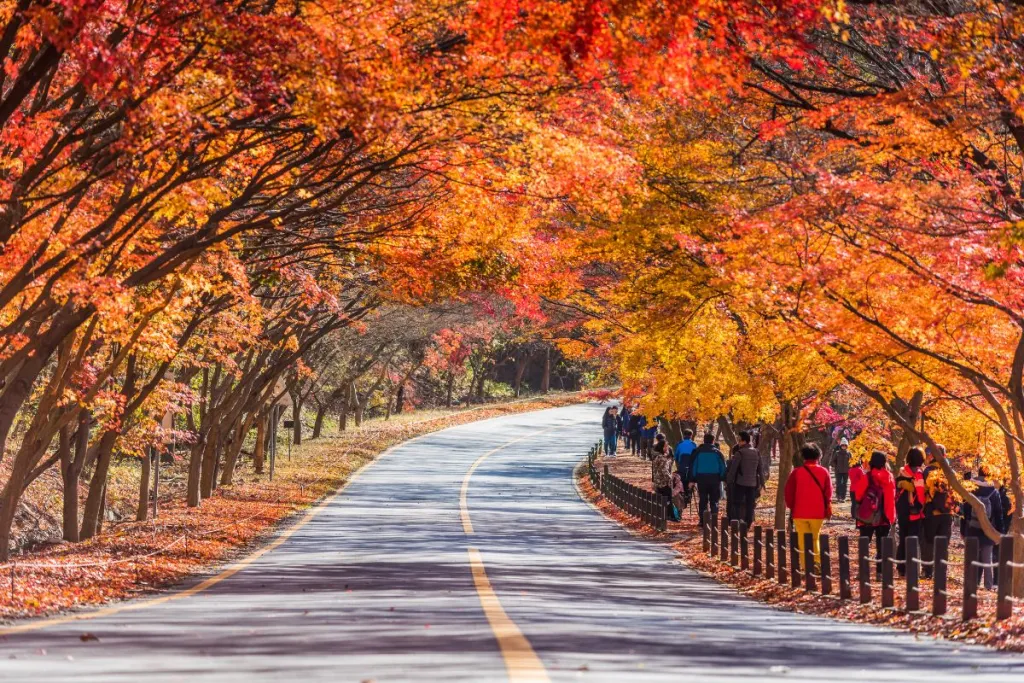
Good news for travellers, especially Muslim globetrotters planning their next Korean adventure! South Korea has officially announced that the K-ETA exemption, which allows visitors from certain countries to enter Korea without applying for the electronic travel authorisation, will continue through 31 Dec 2026. This means that Muslim travellers from eligible countries can enjoy a smoother, hassle-free entry, giving them more time to explore the rich culture, halal food options, and breathtaking destinations Korea has to offer.
What is K-ETA?
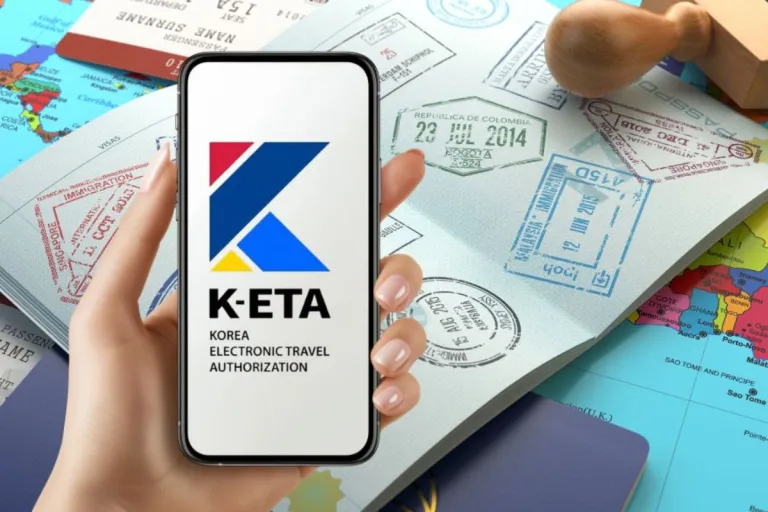
Image credit: Korea Travel Post | Official Website
For those who haven’t kept up, the Korea Electronic Travel Authorisation (K-ETA) was introduced in September 2021. It’s an online permit required for visa-free travellers, similar to other electronic travel systems like Japan’s e-visa or Taiwan’s e-Travel Authorisation. The idea was to make arrivals more efficient while keeping immigration secure.
However, in an effort to boost tourism, South Korea temporarily suspended the K-ETA requirement in 2023 for many nationalities, including major tourism markets like Europe, North America, and parts of Asia. Now, this exemption has been extended through 2026, offering Muslim travellers and other international visitors the convenience of travelling without additional paperwork.
Why this matters for Muslim travellers
For Muslim travellers, fewer administrative steps mean more time to focus on halal-friendly experiences in Korea. From exploring halal-certified restaurants in Seoul and Busan to visiting serene mosques like the Seoul Central Mosque, the K-ETA exemption makes spontaneous trips much easier. And if travellers still wish to apply for K-ETA voluntarily, they can enjoy perks such as skipping the arrival card, which can save precious time after a long flight.
Government’s tourism strategy
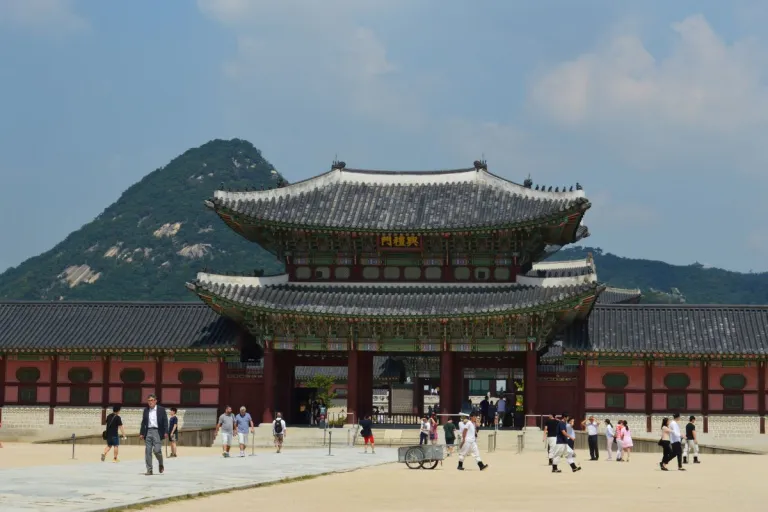
Image credit: Edinnia | Canva Pro
The announcement came during the 10th National Tourism Strategy Meeting, chaired by Prime Minister Kim Min-seok and attended by several government ministries. Officials also shared exciting plans to launch a tourist pass in 2026, which will combine public transportation and access to cultural and leisure sites, perfect for visitors who want to explore Korea without the stress of buying separate tickets.
The bigger goal? Attract 30 million international tourists by 2030. To achieve this, South Korea is focusing on promoting K-culture, diversifying destinations beyond Seoul, and highlighting regional attractions, a win for Muslim travellers looking for off-the-beaten-path experiences, halal dining, and peaceful prayer spots outside the bustling capital.
Who can travel K-ETA free?
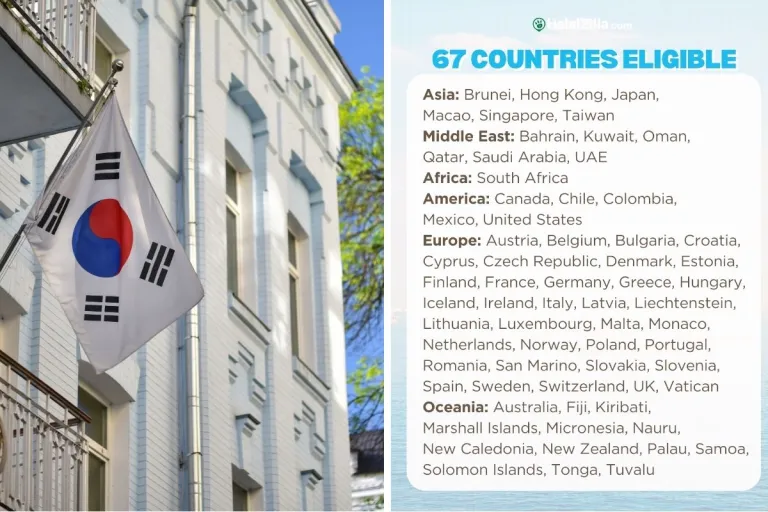
Image credit (L-R): Oleksandr | Canva Pro; @halalzilla | Instagram
Currently, citizens of 67 countries and territories are eligible for K-ETA-free travel. This includes:
Africa: South Africa
Americas: Canada, Chile, Colombia, Mexico, United States
Asia: Brunei, Hong Kong, Japan, Macao, Singapore, Taiwan
Europe: Most EU countries, the UK, Iceland, Norway, Monaco, the Vatican
Middle East: Bahrain, Israel, Kuwait, Oman, Qatar, Saudi Arabia, UAE
Oceania: Australia, New Zealand, Fiji, Kiribati, Marshall Islands, Micronesia, Nauru, New Caledonia, Palau, Samoa, Solomon Islands, Tonga, Tuvalu
This is particularly great news for Muslim travellers from countries like Singapore, Brunei, Malaysia, or the Middle East, who often look for smooth entry processes for short vacations, cultural trips, or halal food tours.
Digital e-Arrival Card: Making entry even easier

Image credit: Wayne Field | Canva Pro
Since February 2025, South Korea has allowed travellers to complete the e-Arrival Card online up to three days before arrival. While both paper and digital forms are accepted until December 2025, the digital system becomes mandatory in 2026, helping reduce airport queues and making arrivals faster.
Certain travellers are exempt from the e-Arrival Card, including:
K-ETA holders
Registered residents in Korea
Group tourists from China, Vietnam, the Philippines, Indonesia, India, and Cambodia
Jeju transfer passengers and certain student groups
Airline crew members
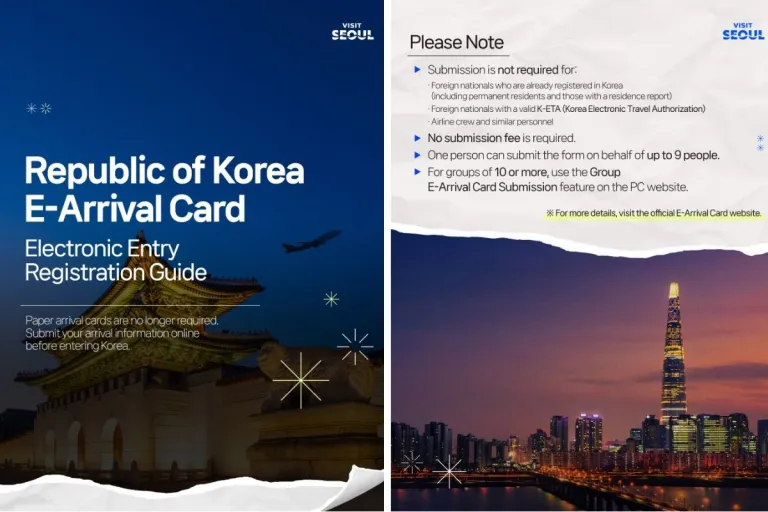
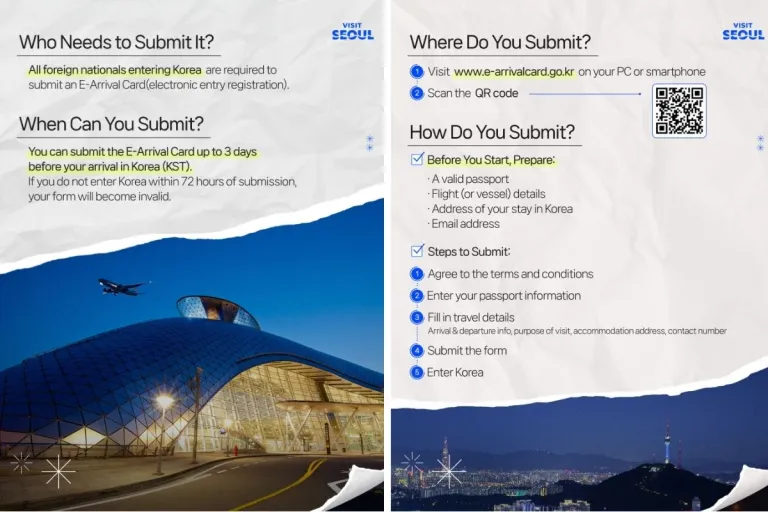
Image credit: Visit Seoul | Official Facebook
For Muslim travellers, this means that if they have a valid K-ETA, they can skip the arrival card entirely, streamlining their entry and giving them more time to start exploring halal eateries, prayer spaces, and cultural sites.
Also read: 9 Halal Things That Are Cheaper in South Korea Compared to Singapore
So, start planning that halal-friendly Korean adventure, your next K-drama-worthy travel story awaits!
Published at
About Author
Aimi Zulkiflee
Aimi is the ultimate daydreamer with a flair for adventure and an avid novel reader with a soft spot for all things fairytale. She is known for her friendly demeanor, albeit with a bit of a short temper. Forever striving to live her cutesy yet demure life.
Subscribe our Newsletter
Get our weekly tips and travel news!
Recommended Articles
8 Muslim-Friendly Korean Snacks You Can Find in Seoul Halal Food in Seoul: Top 8 Muslim-Friendly Restaurants When hunting down halal food spots in Seoul, this list of eateries will be your best friend!
A Muslim-Friendly Guide To Halal Restaurants In Seoul And Jeju Finding Halal food in Korea is getting easier by the day as the country firms up its reputation as a Muslim-friendly destination. Bookmark these Halal-certified or Muslim-friendly restaurants for your next trip to Seoul and Jeju!
Muslim Travellers Wanted in Four East Asia Countries Japan, Hong Kong, South Korea and Taiwan are ramping up their Muslim-friendly infrastructure to embrace more Muslim travellers.
11 Halal-Friendly Snacks to Buy from Seoul’s Lotte Mart Spot these 11 halal-friendly snacks while you’re shopping at Lotte Mart in Seoul!
Latest Articles
10 Best Halal Restaurants in Macao for Muslim Travellers Explore 10 Best Halal Restaurants in Macao for a halal food hunt in Macao
Best Resorts in Sabah, Malaysia With Amazing Nature Views Discover the best resorts in Sabah, Malaysia, from beachfront escapes and island stays to rainforest retreats with stunning nature views
10 Best Padang Restaurants in Jakarta for Authentic Indonesian Food Discover the 10 best Padang restaurants in Jakarta for authentic Indonesian food, from legendary rendang and Ayam Pop to hidden Minang favourites
Bangkok Declares State of Emergency Due to Flooding: Essential Travel Guidance for Muslim Travellers Stay safe, everyone!
8 Day Trips From Tokyo for Muslim Travellers to Elevate Your Japan Itinerary It's your sign to travel outside Tokyo!